SQUARIET
SQUARIET
-
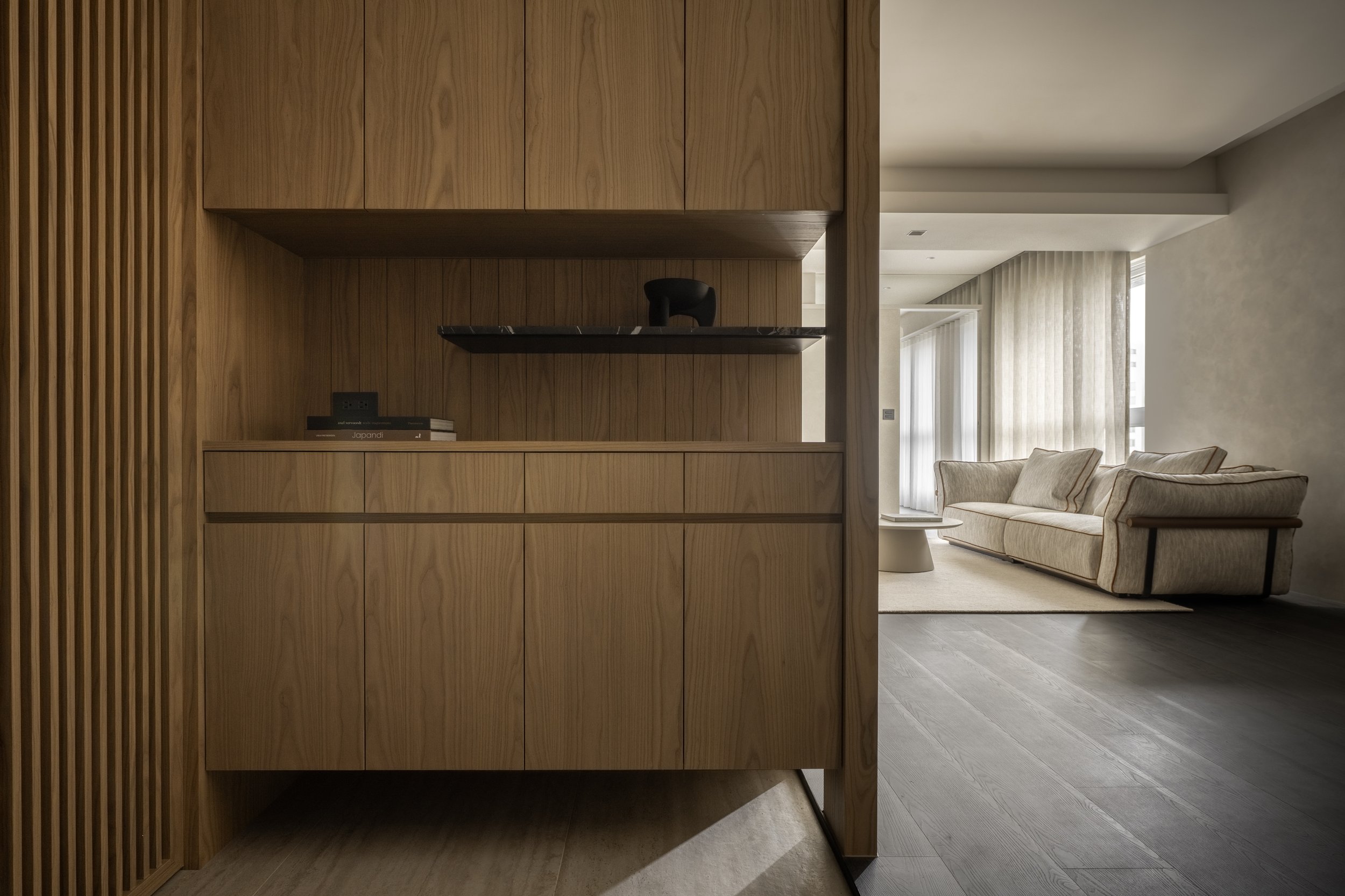
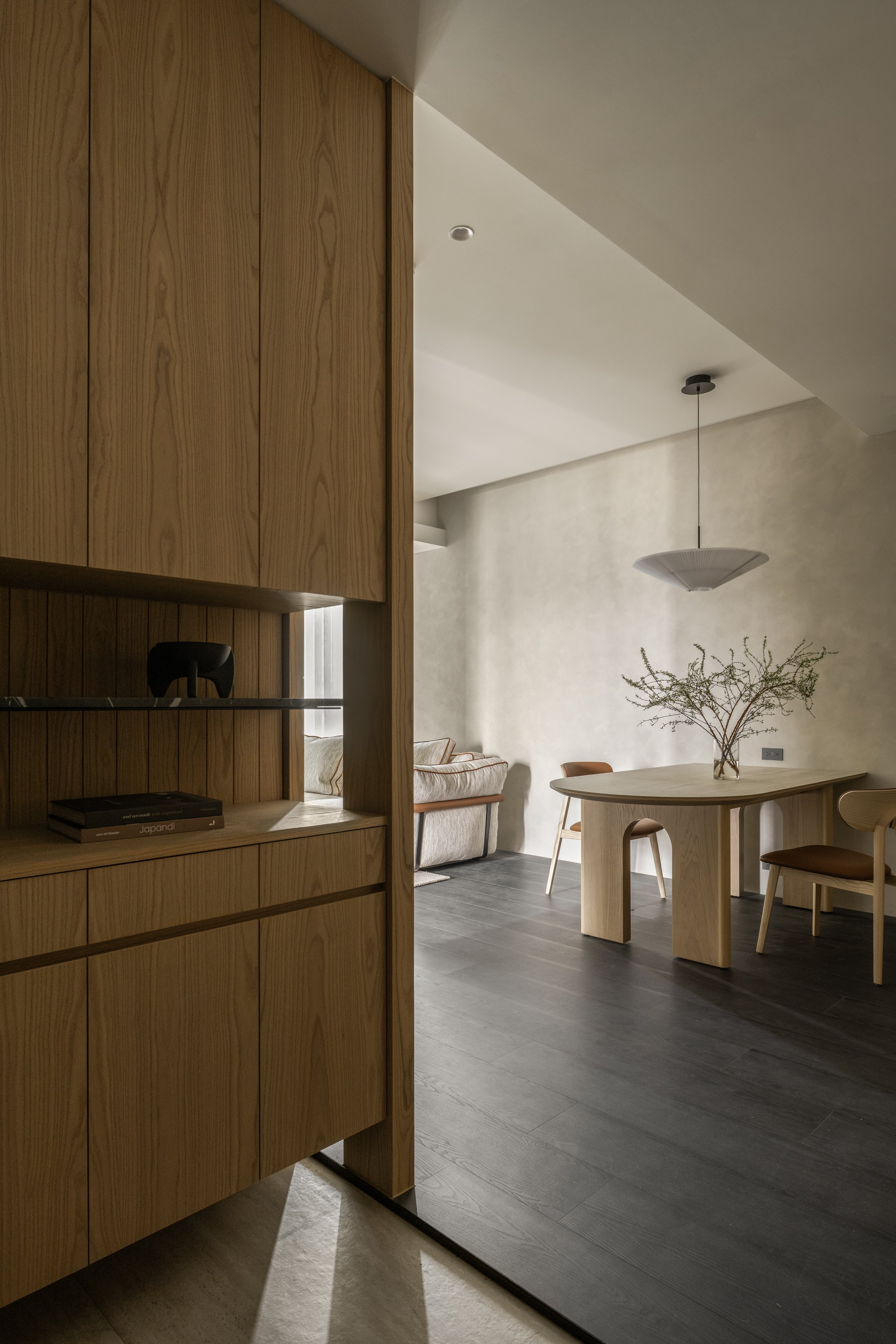
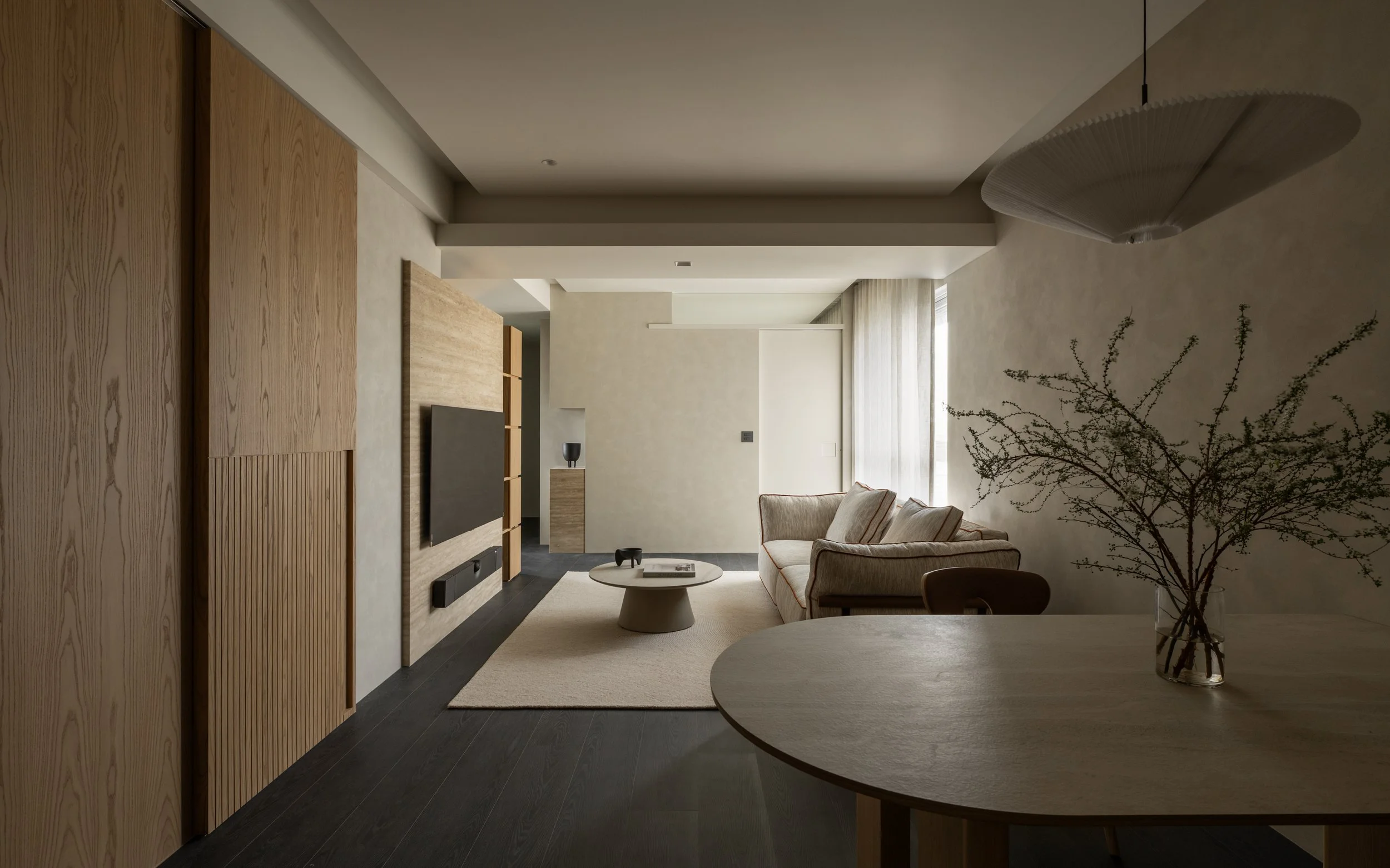
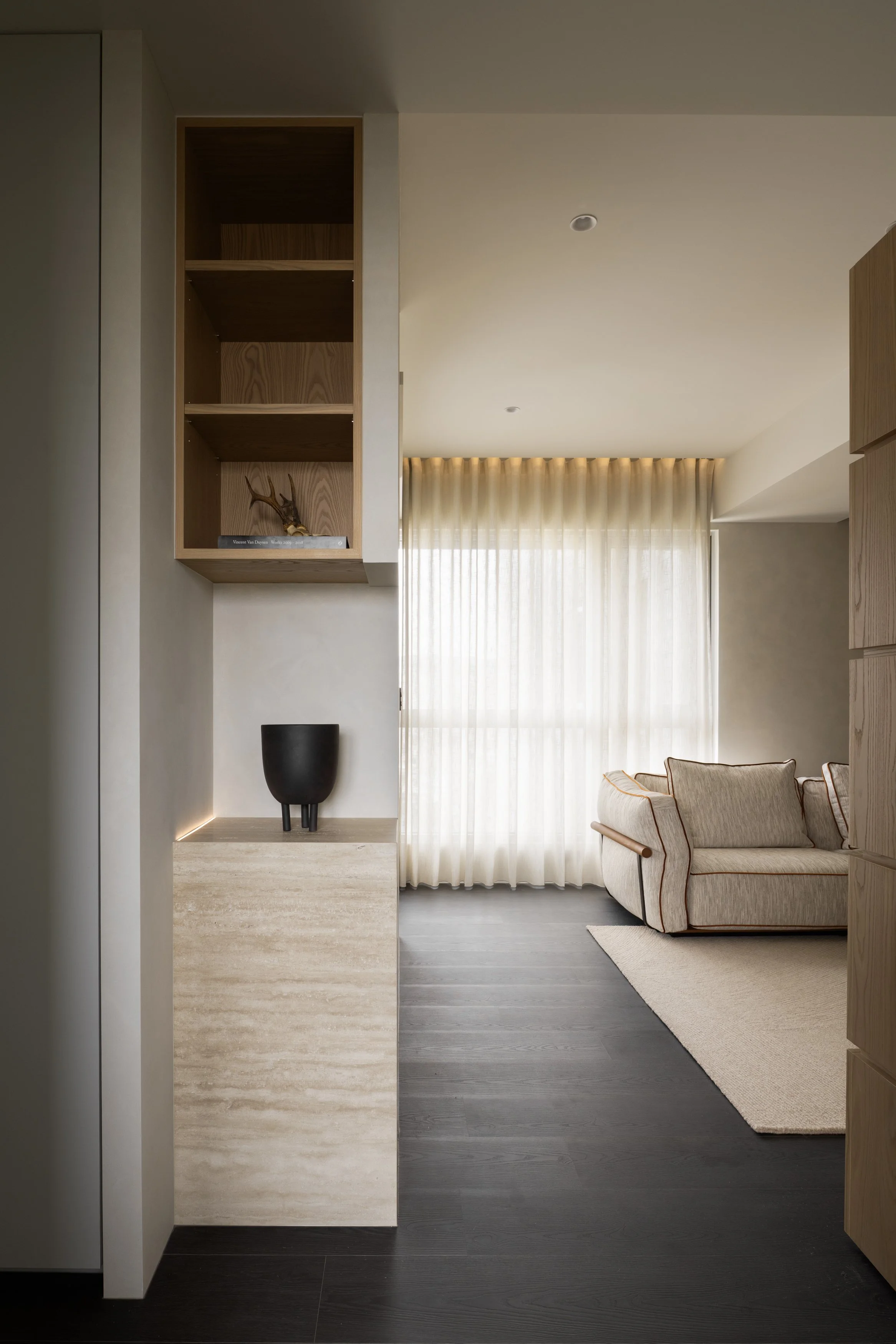
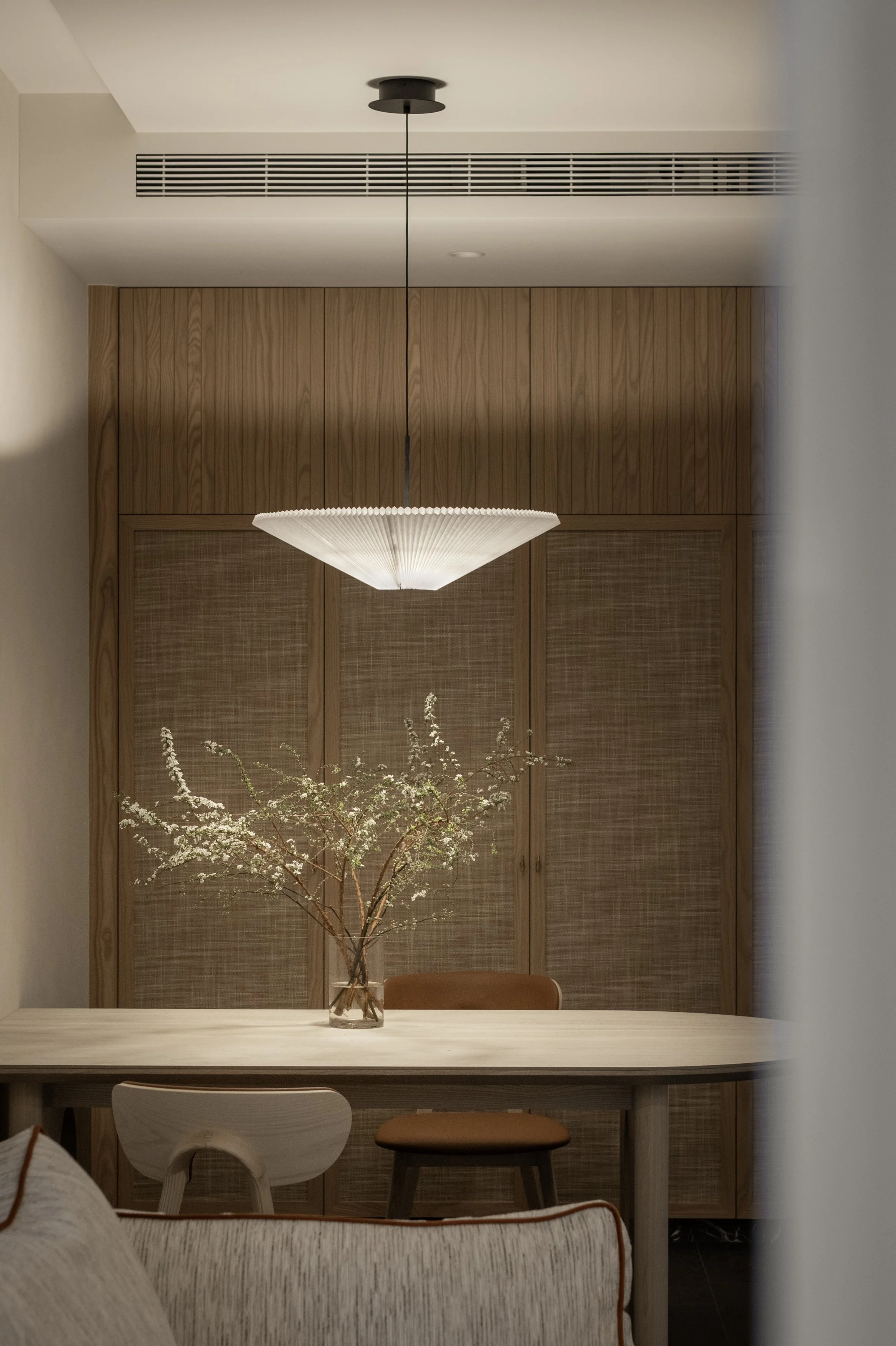
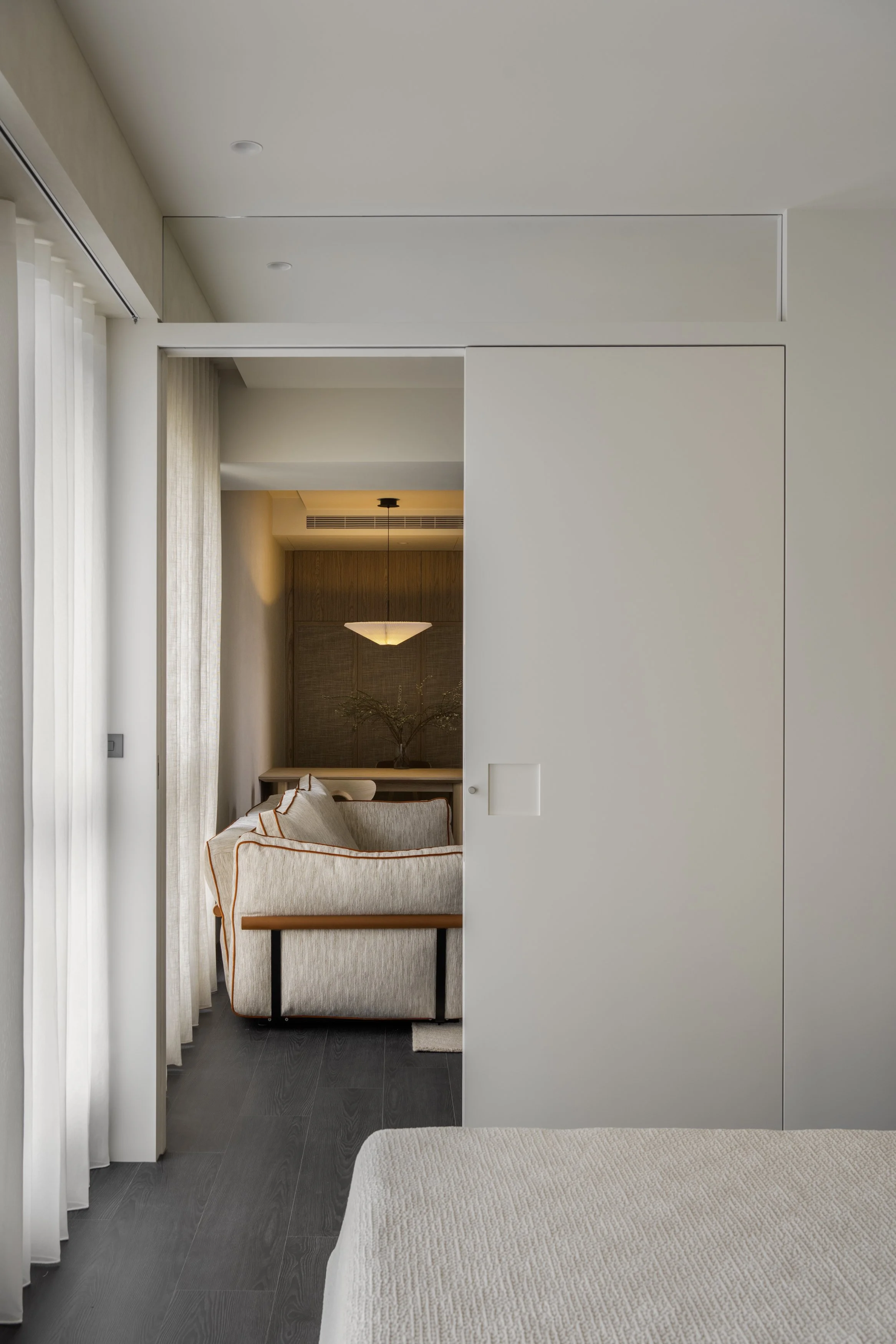
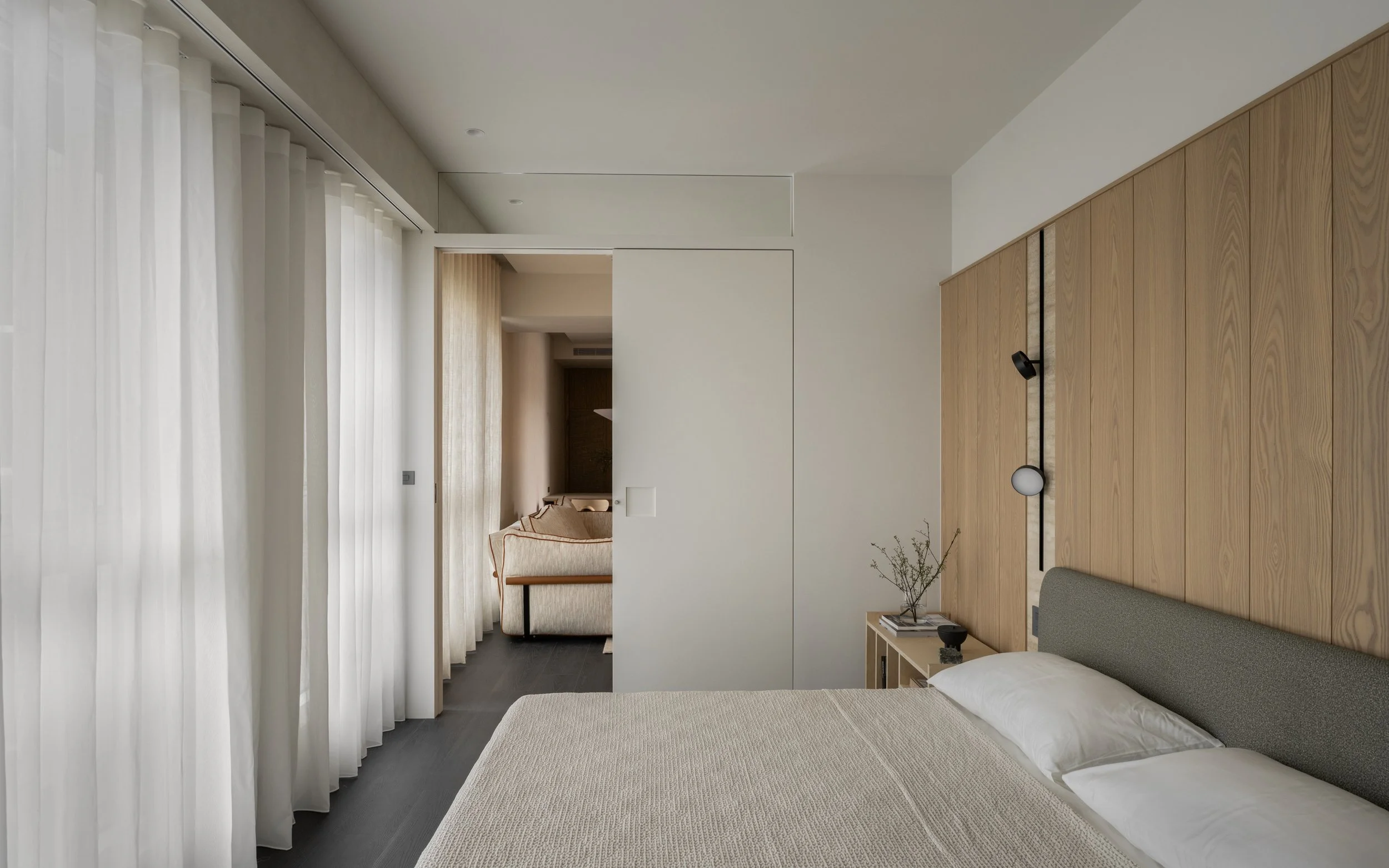
光在此不僅作為照明存在,更是一種被容納、被停留的狀態。
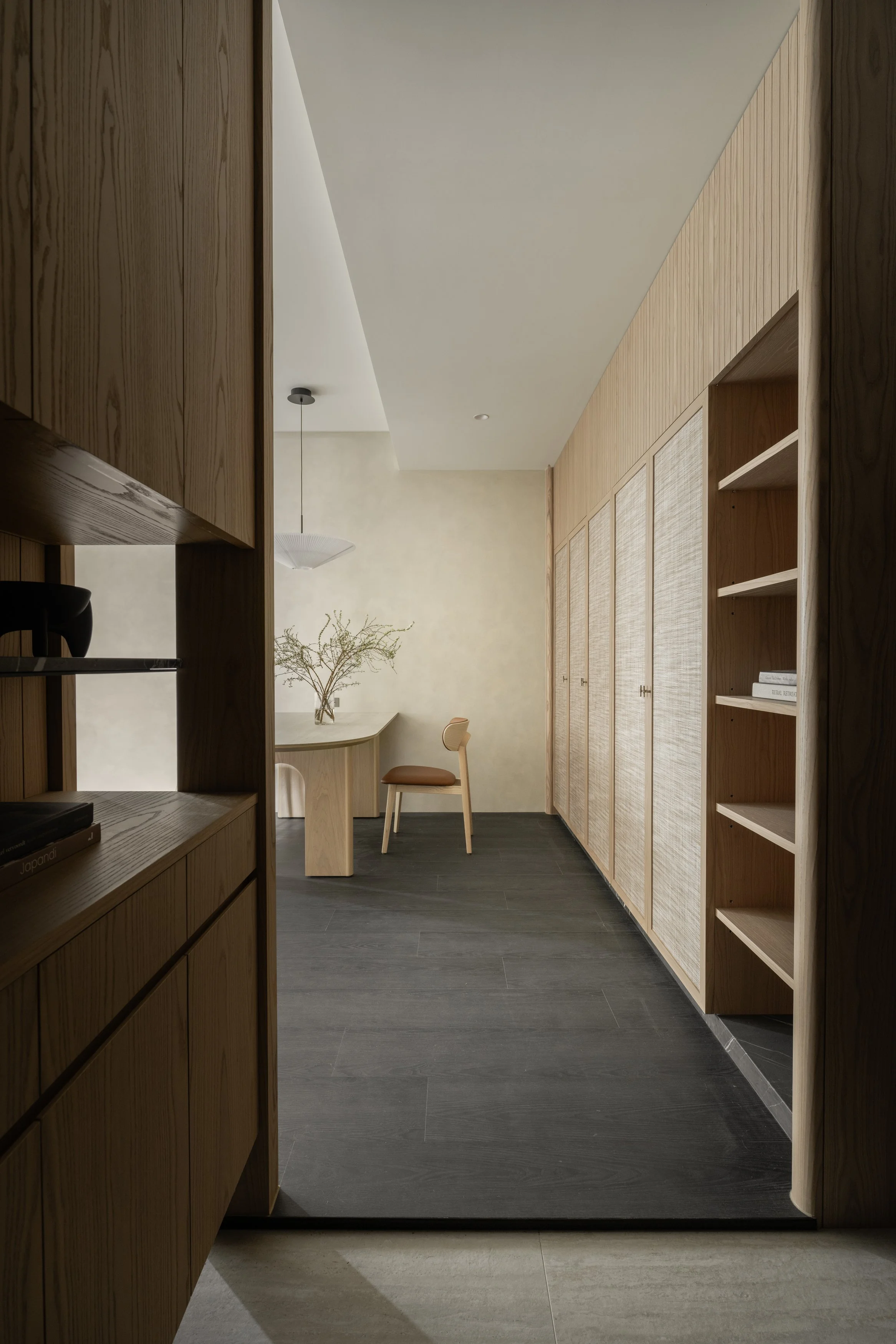
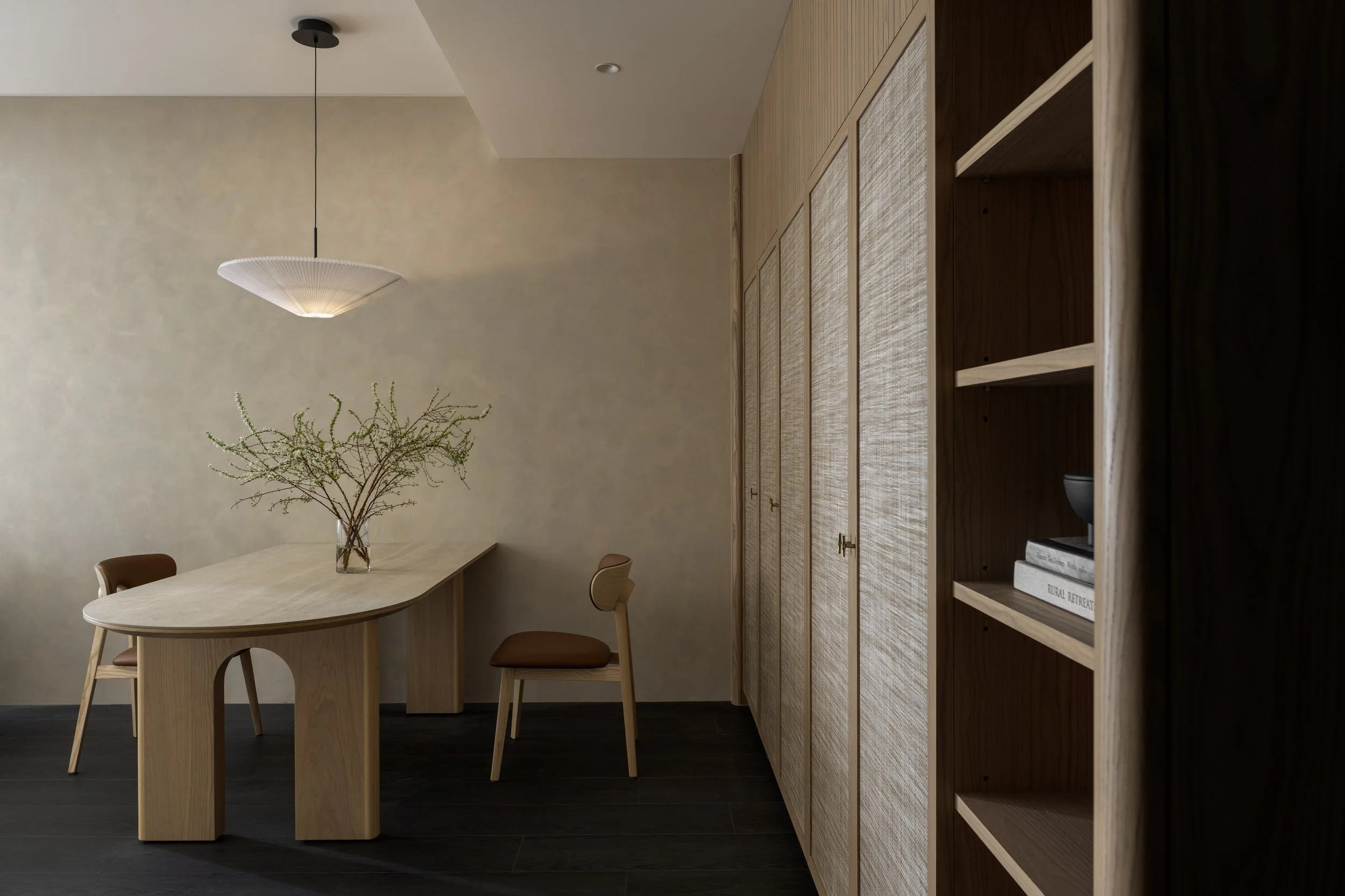
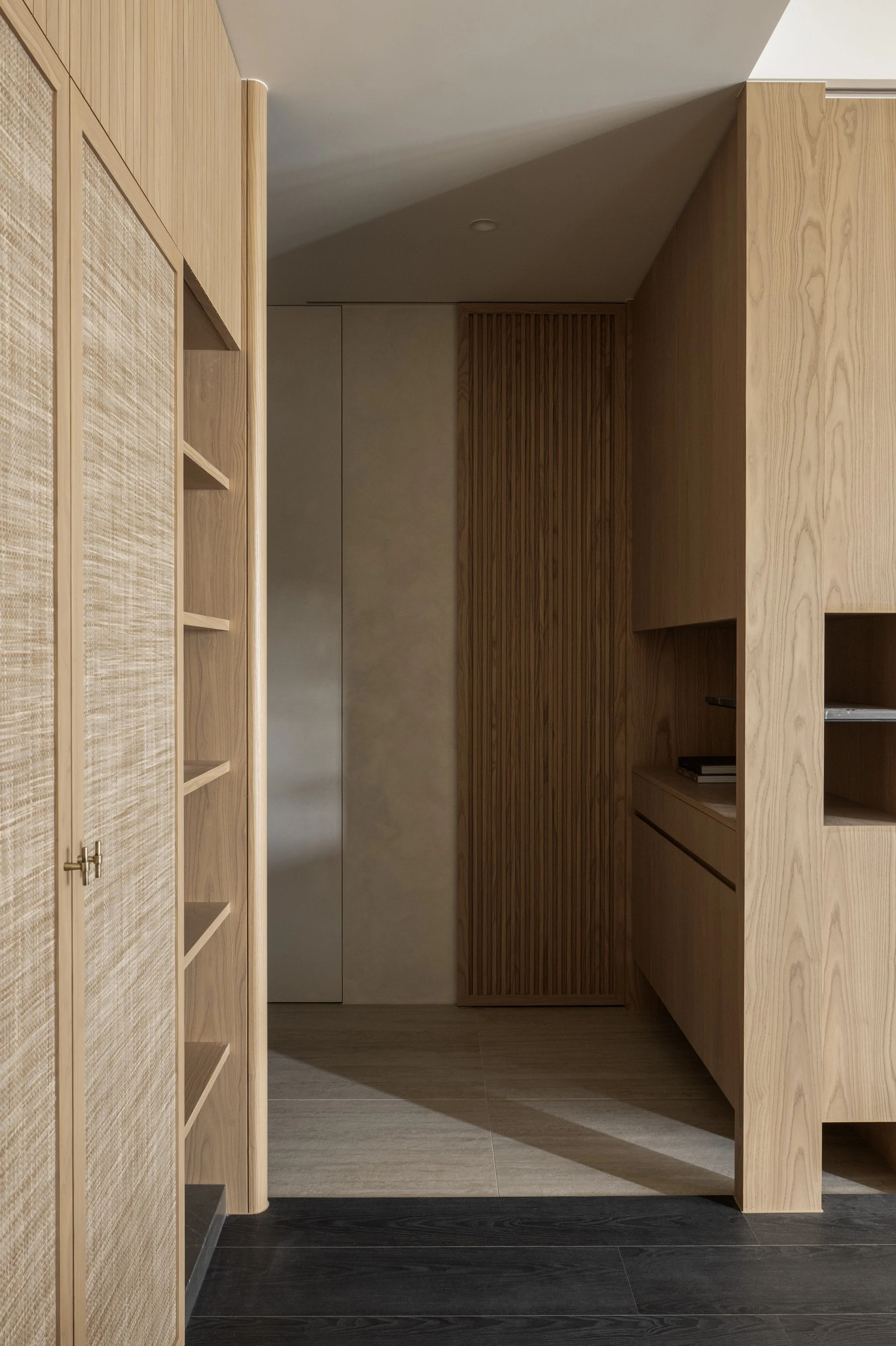
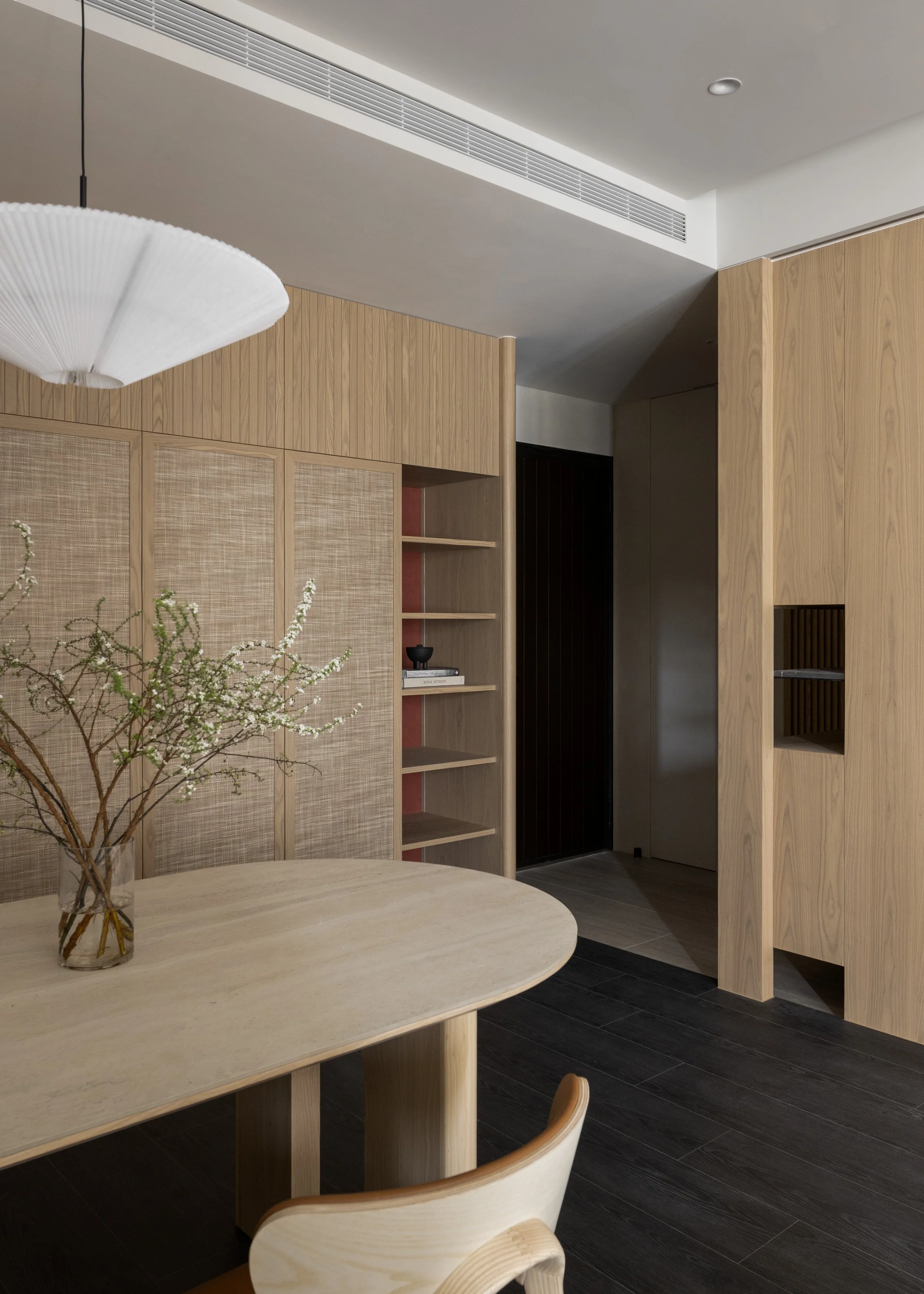
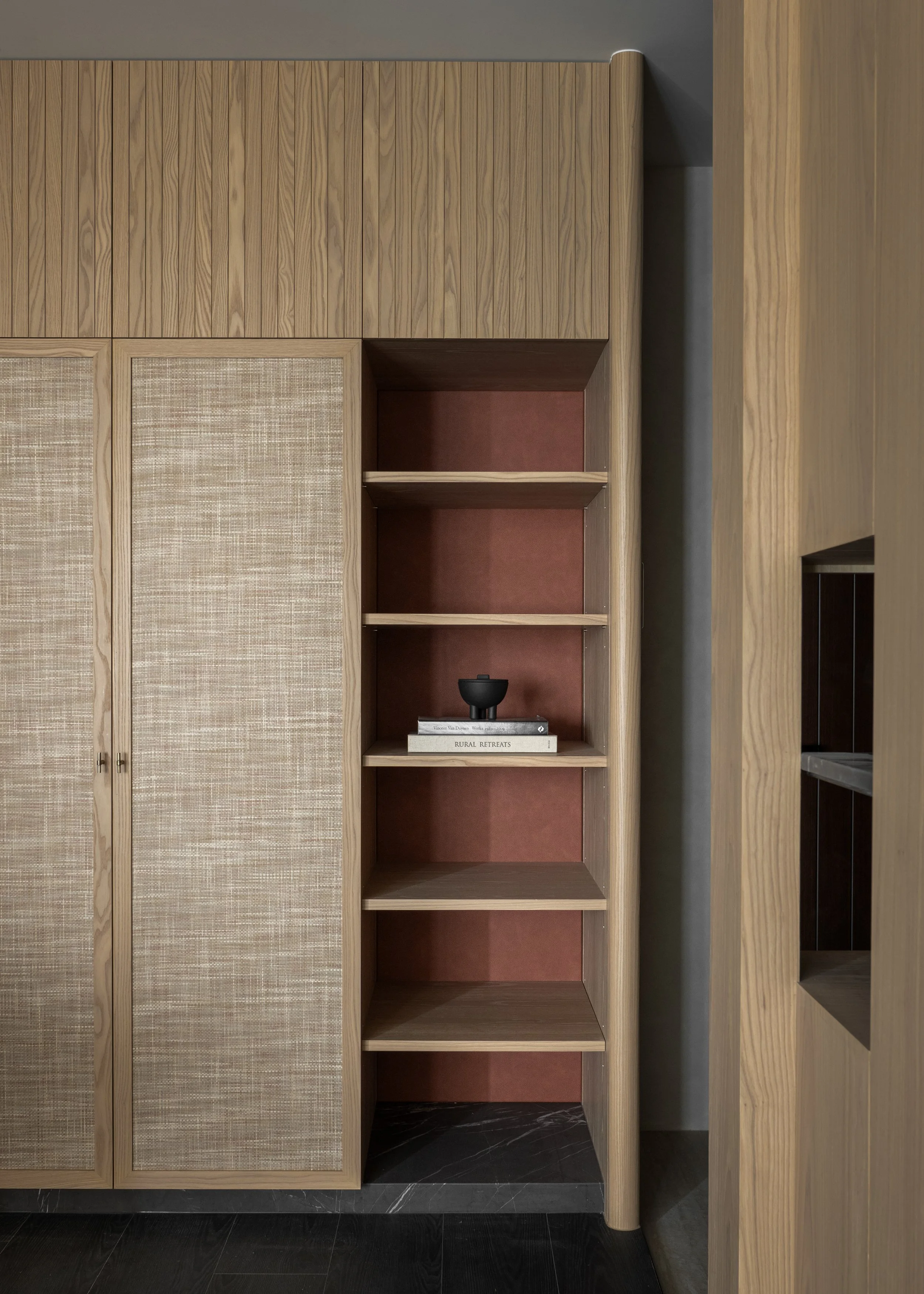
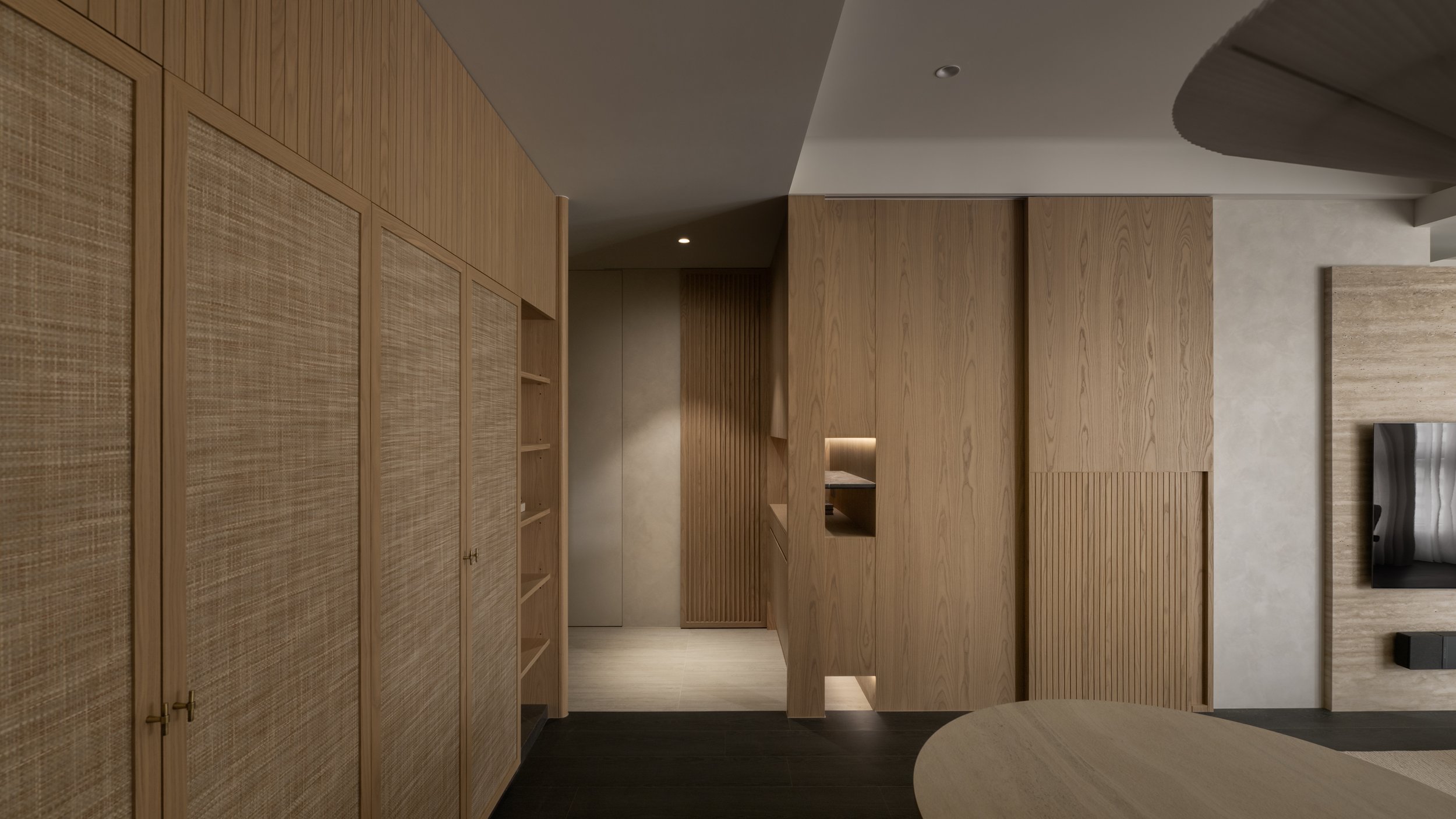
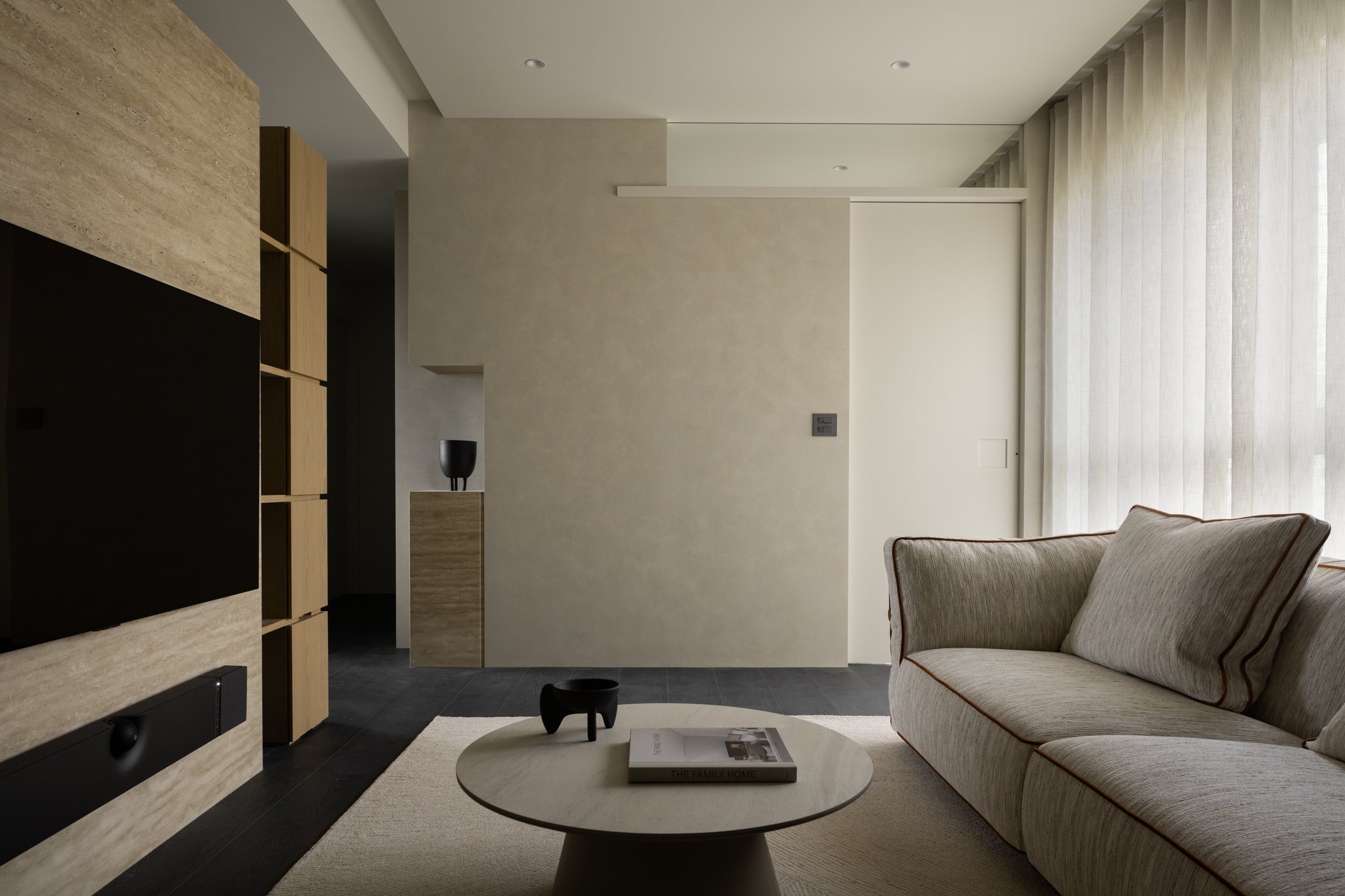
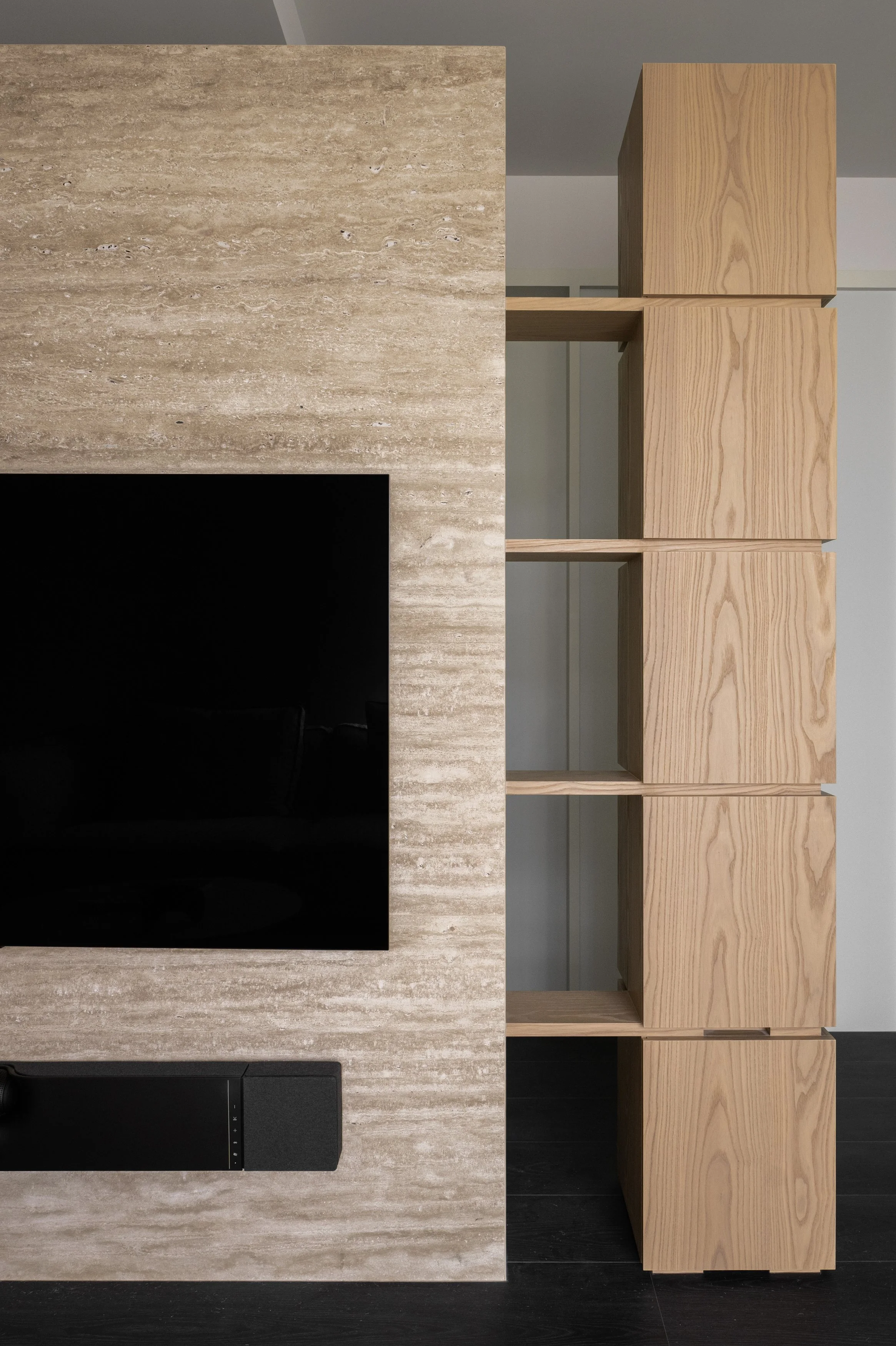
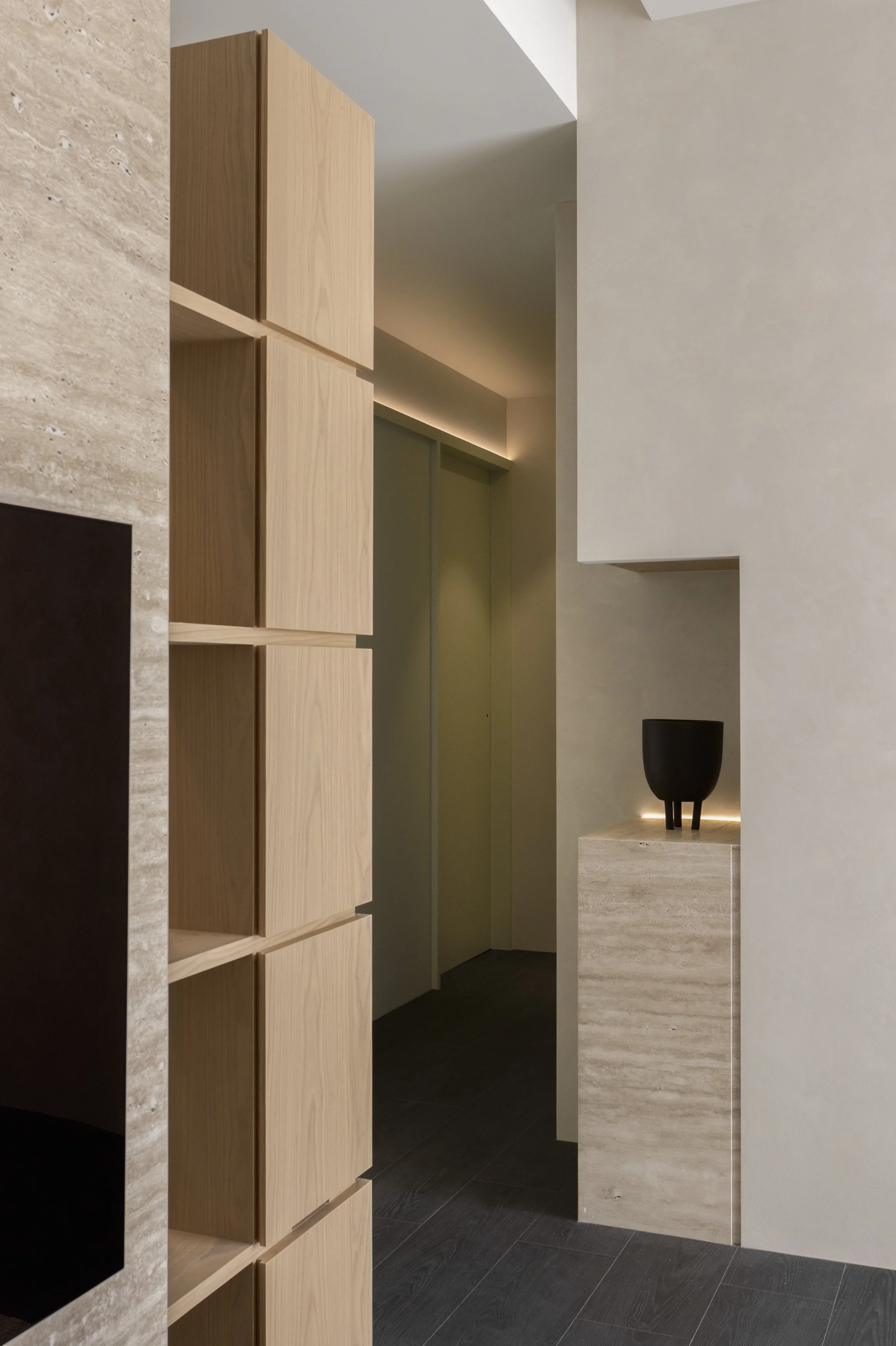
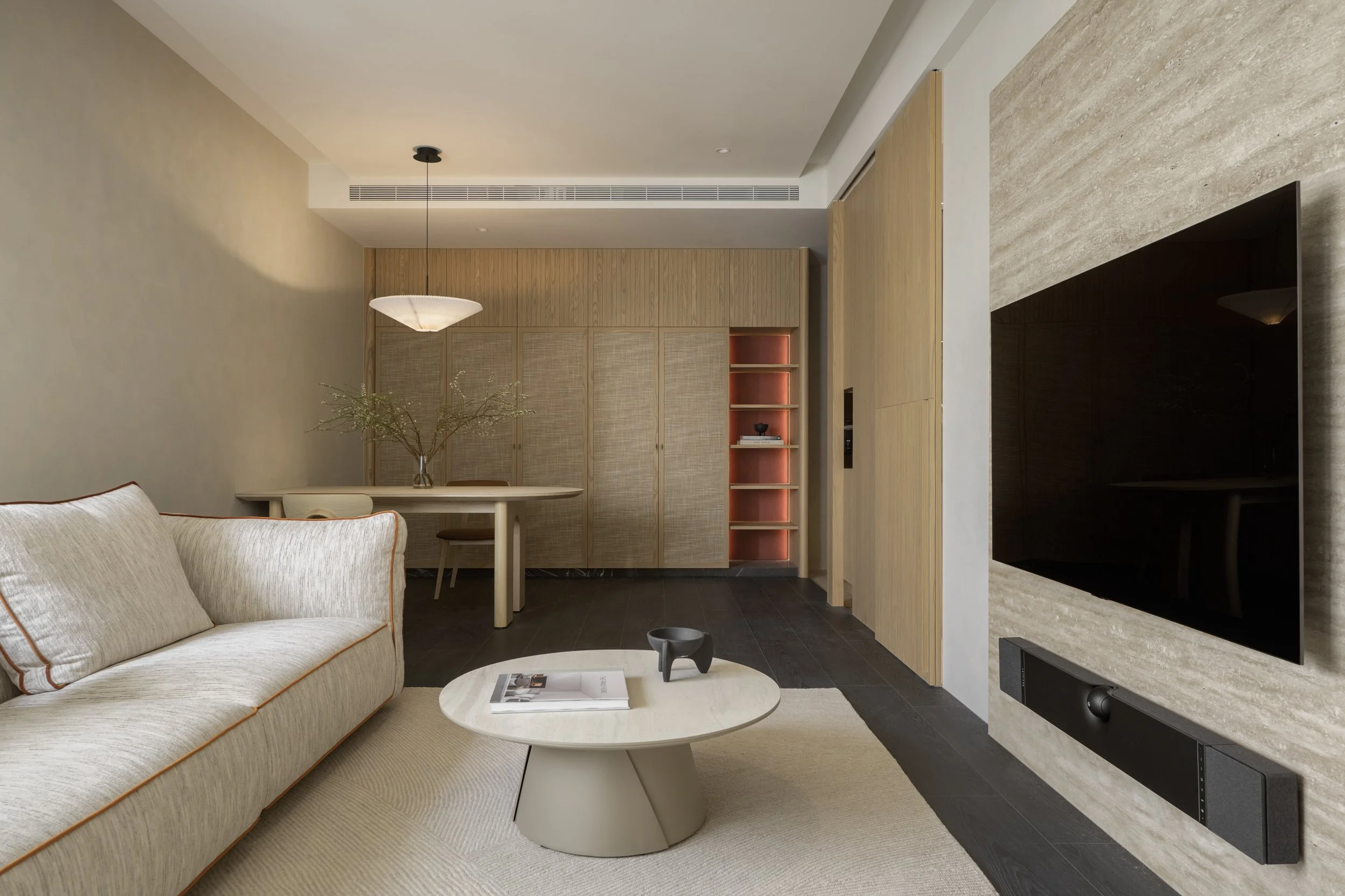
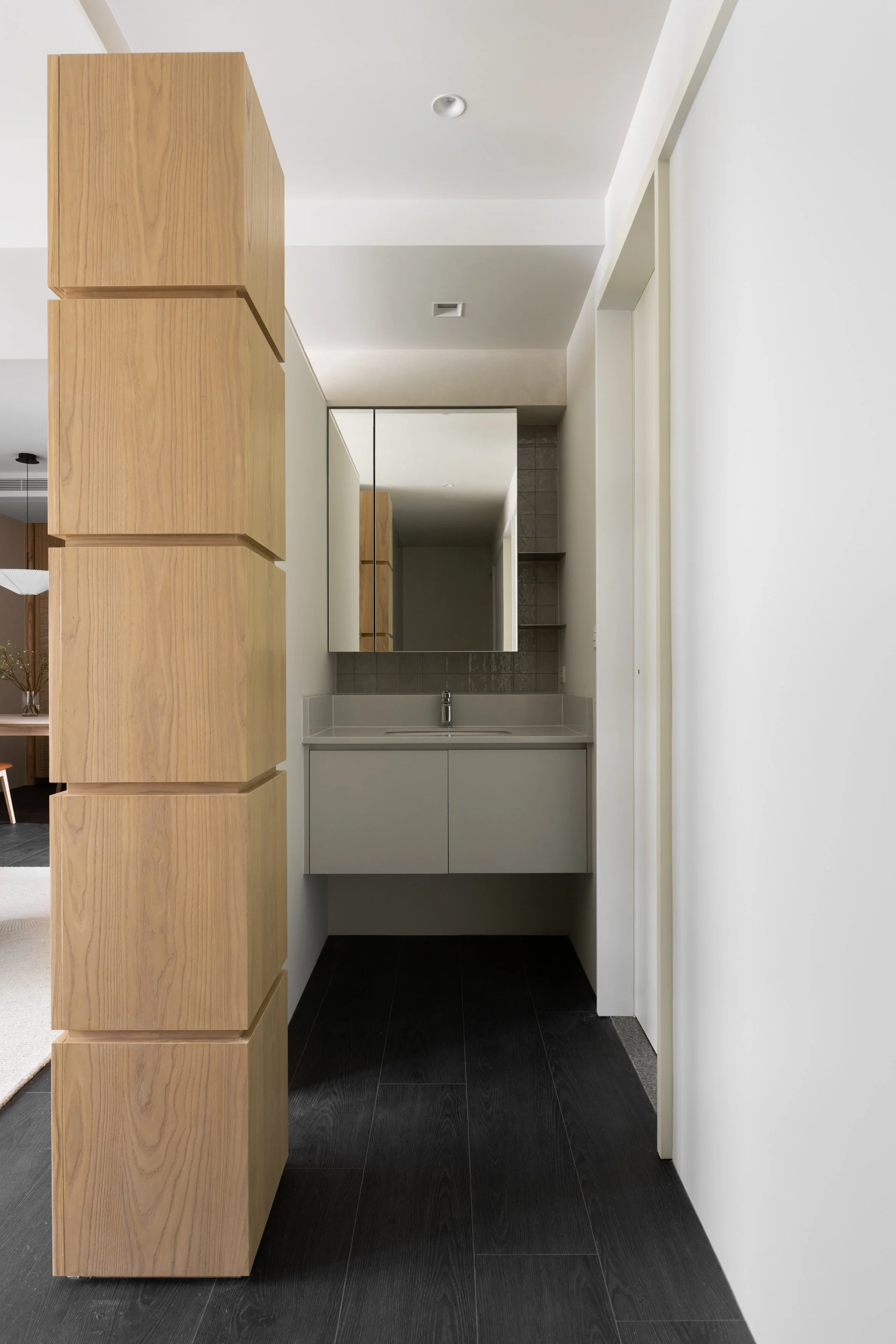
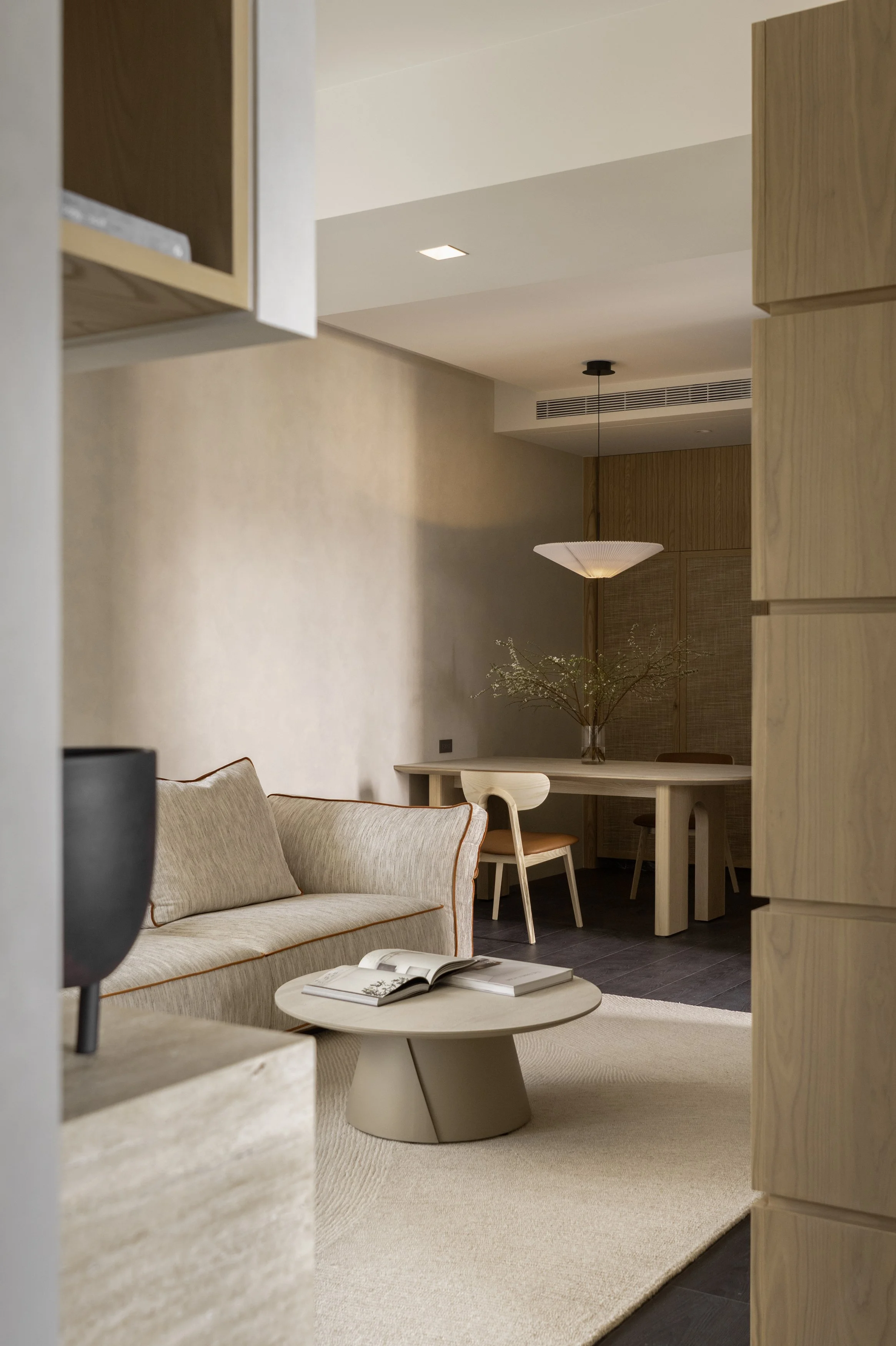
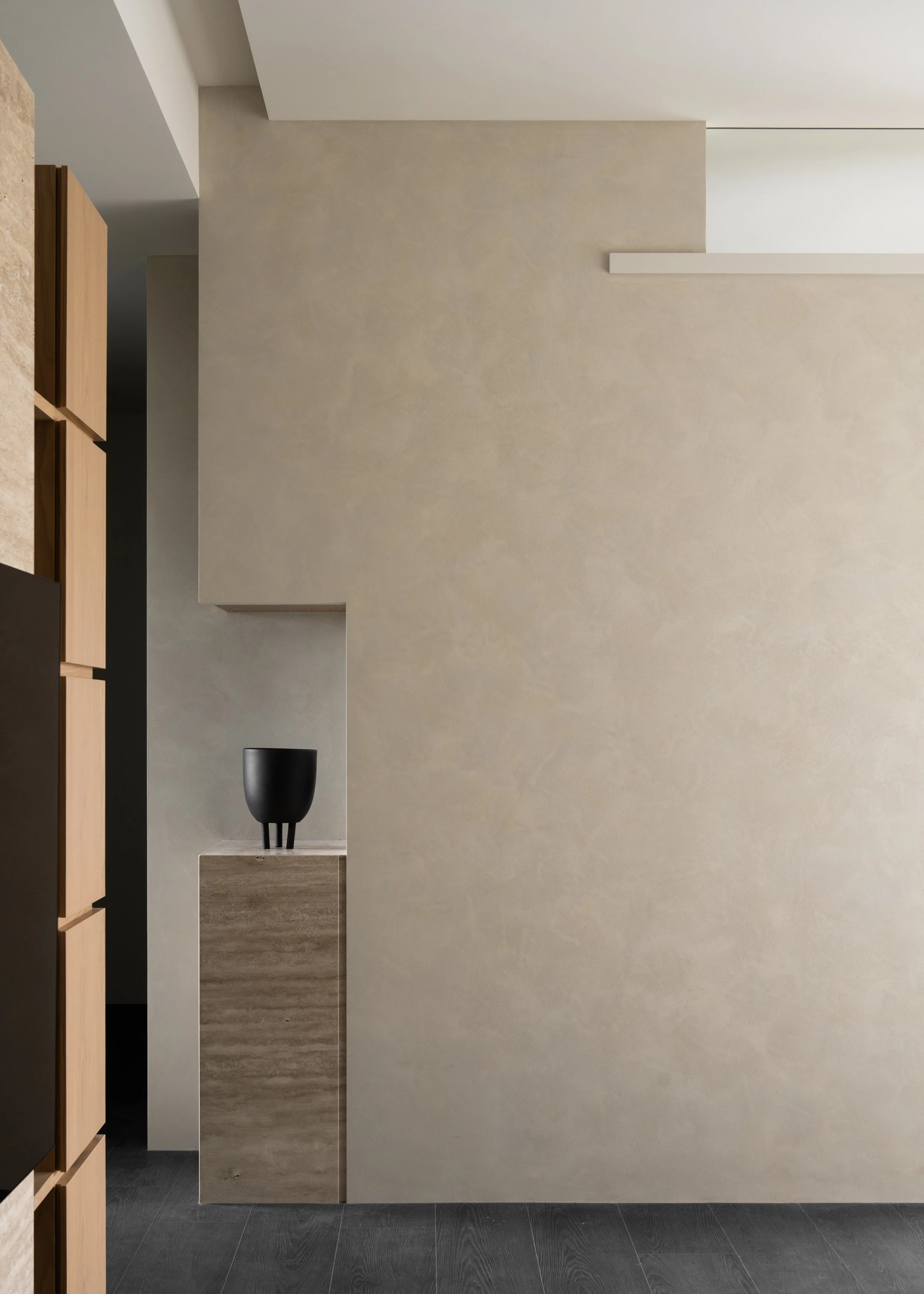
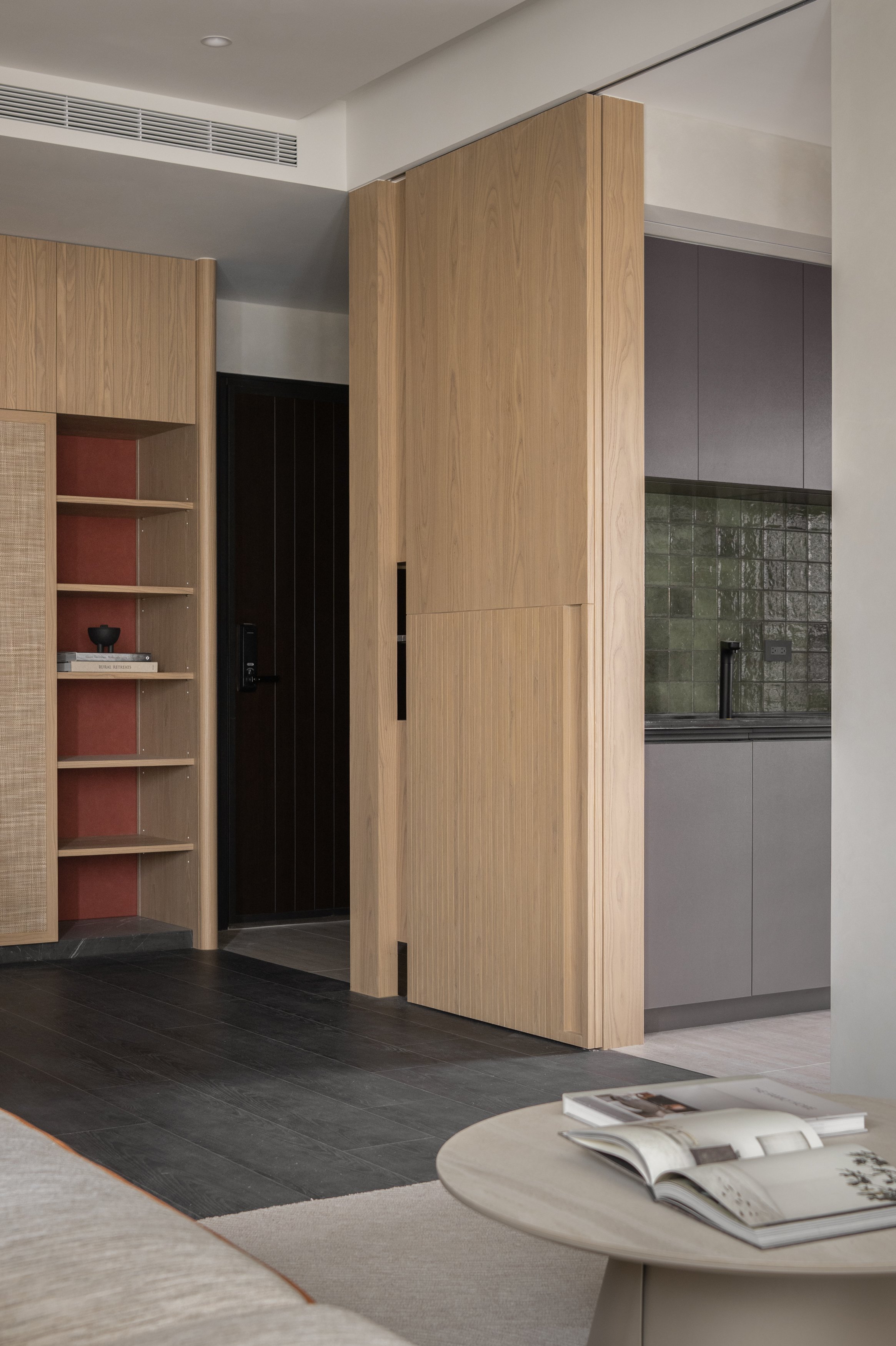
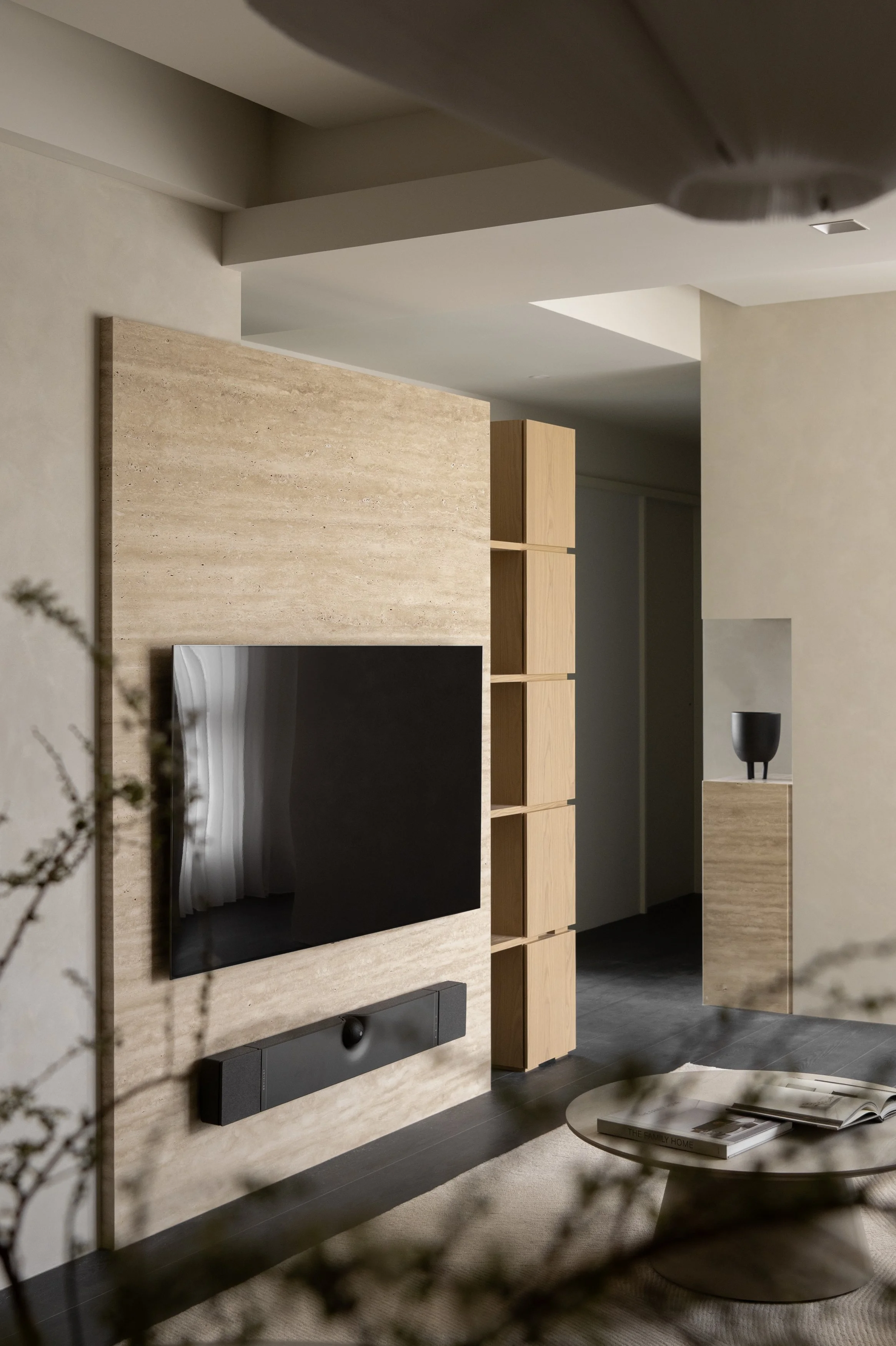
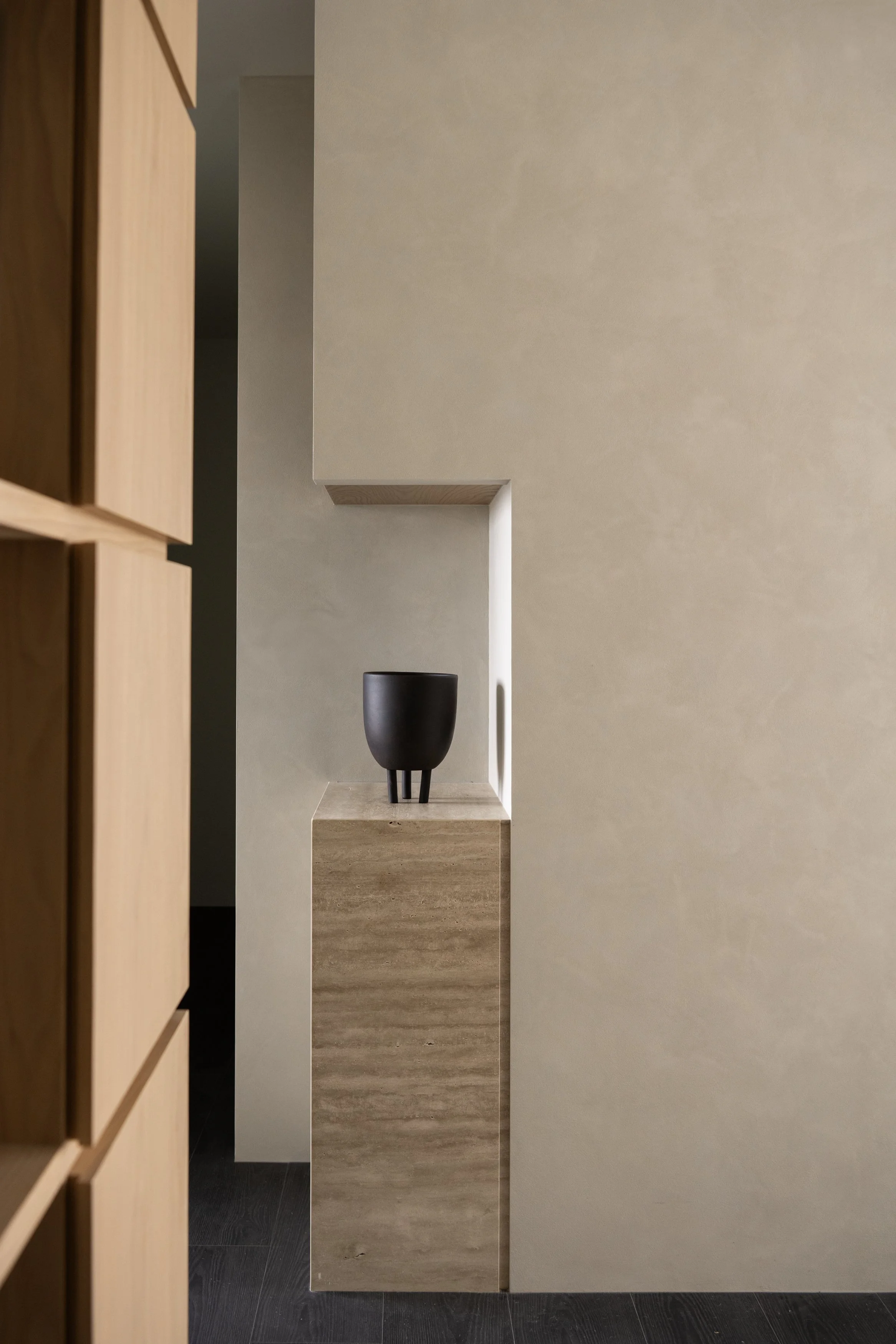
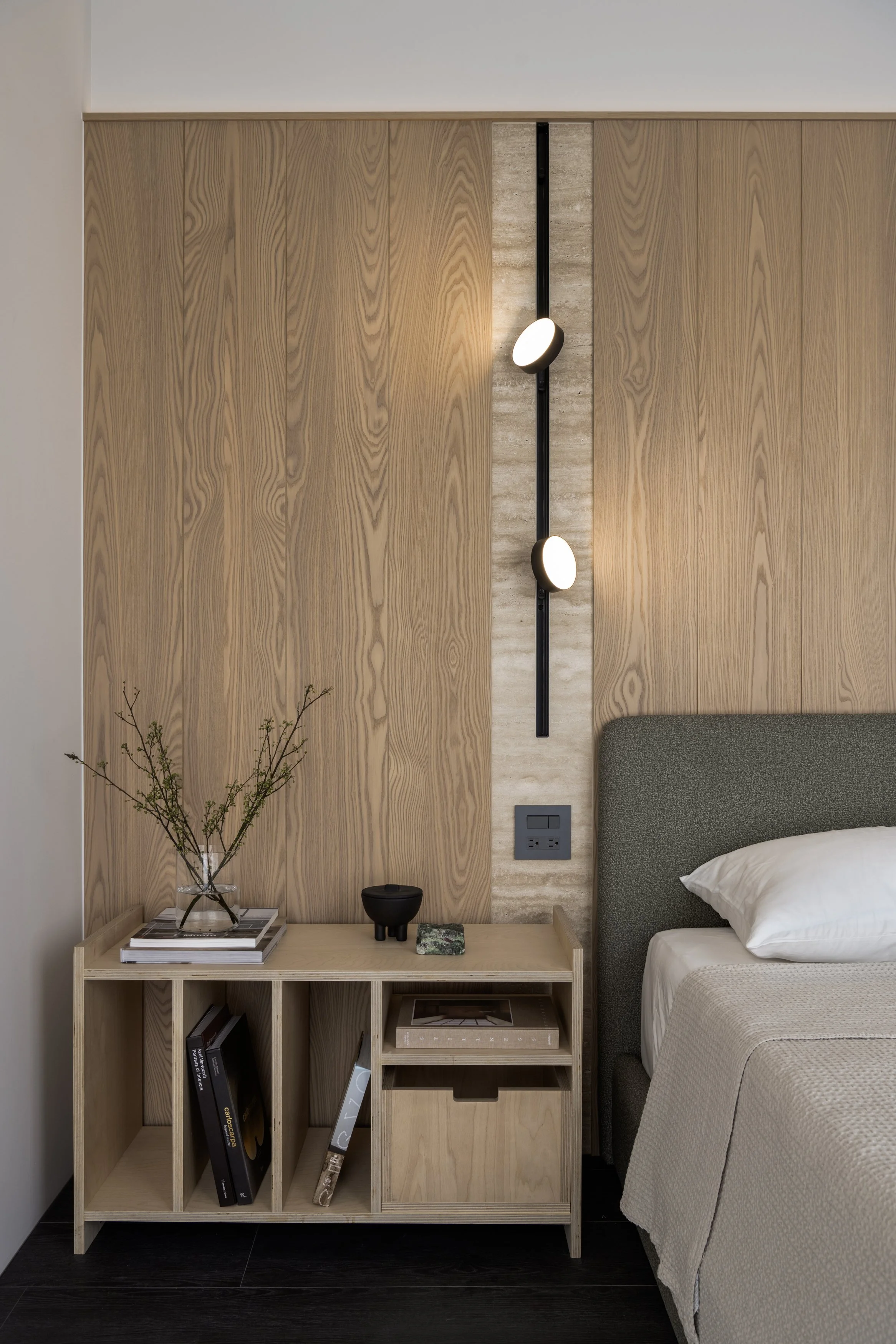
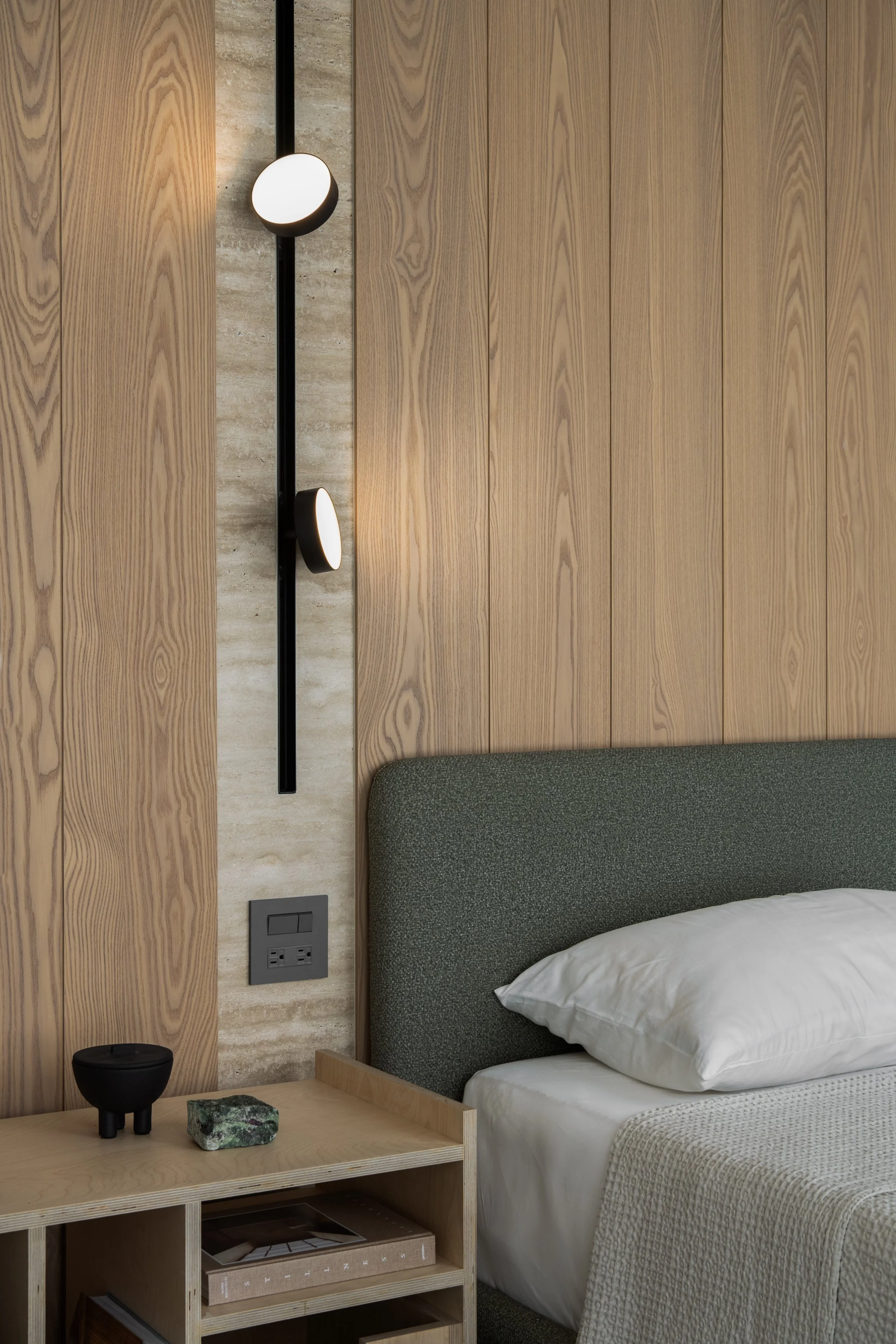
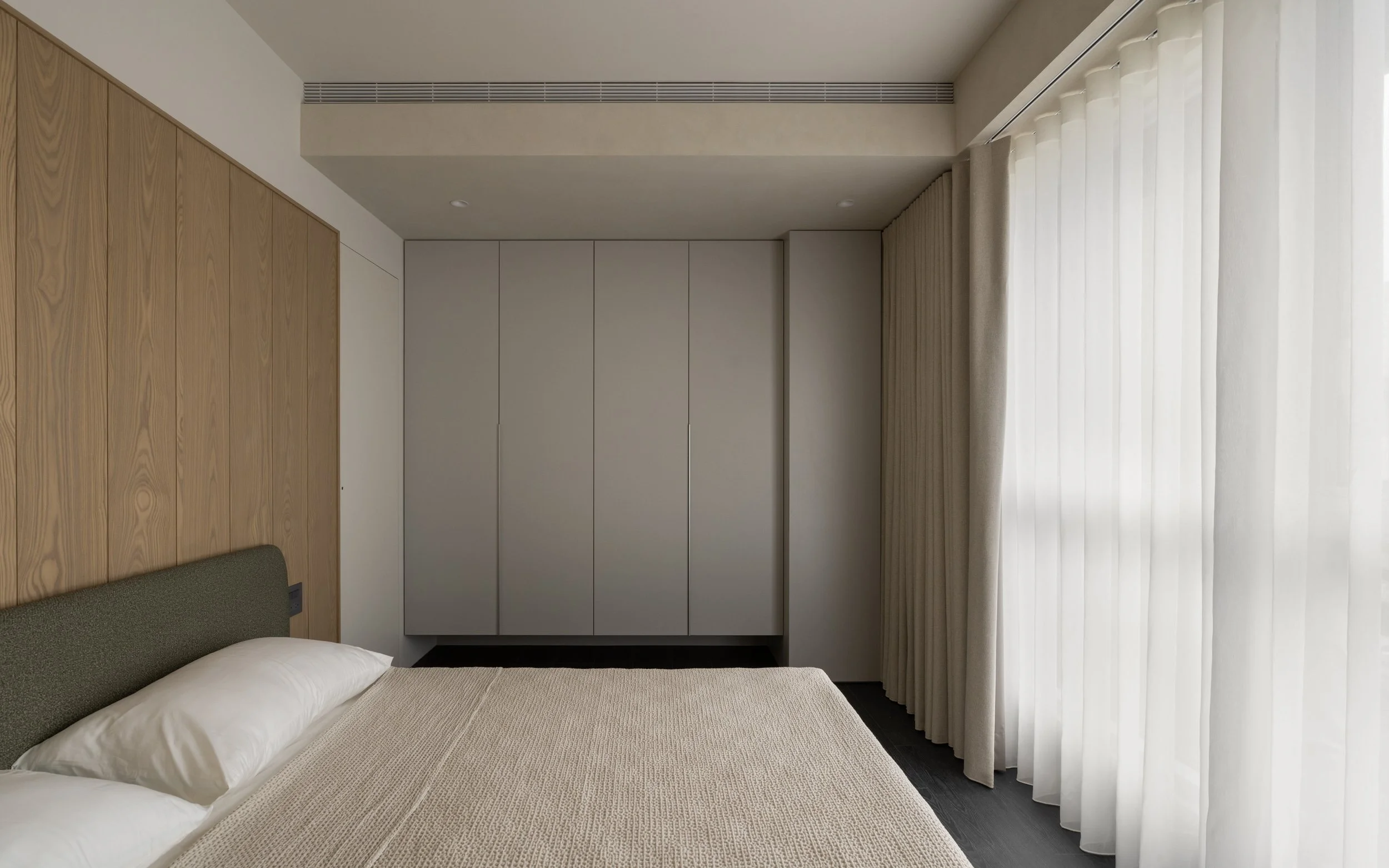
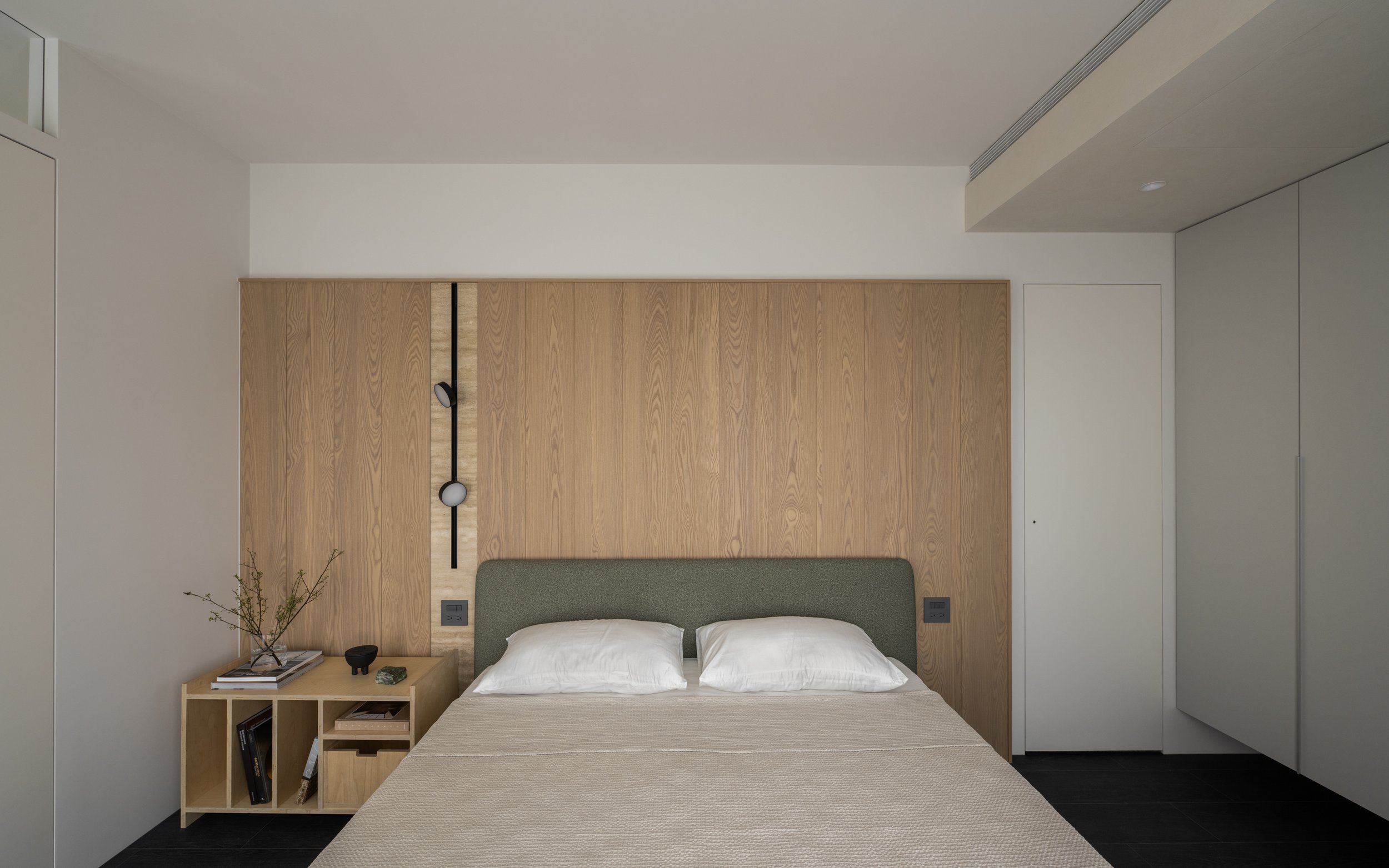
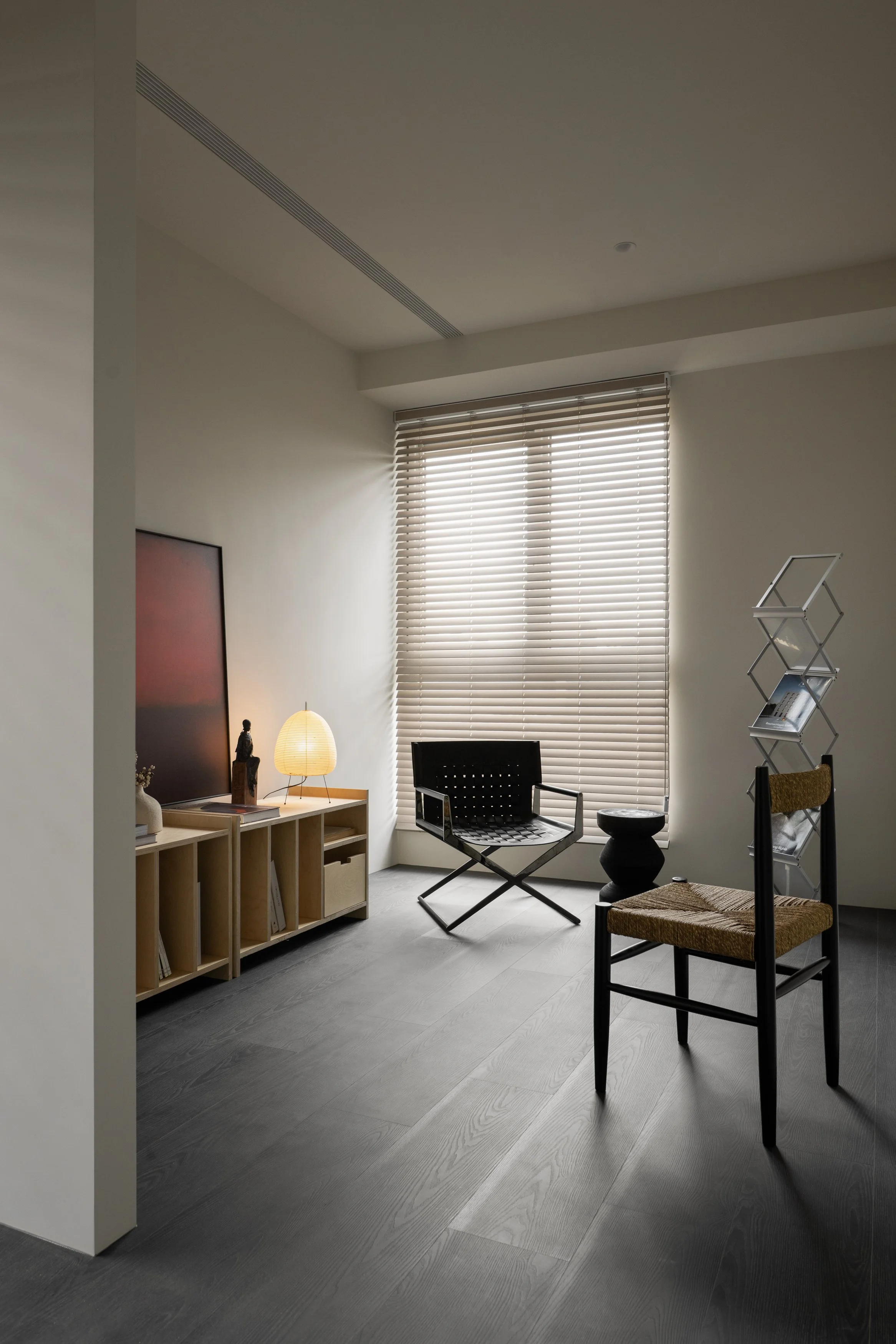
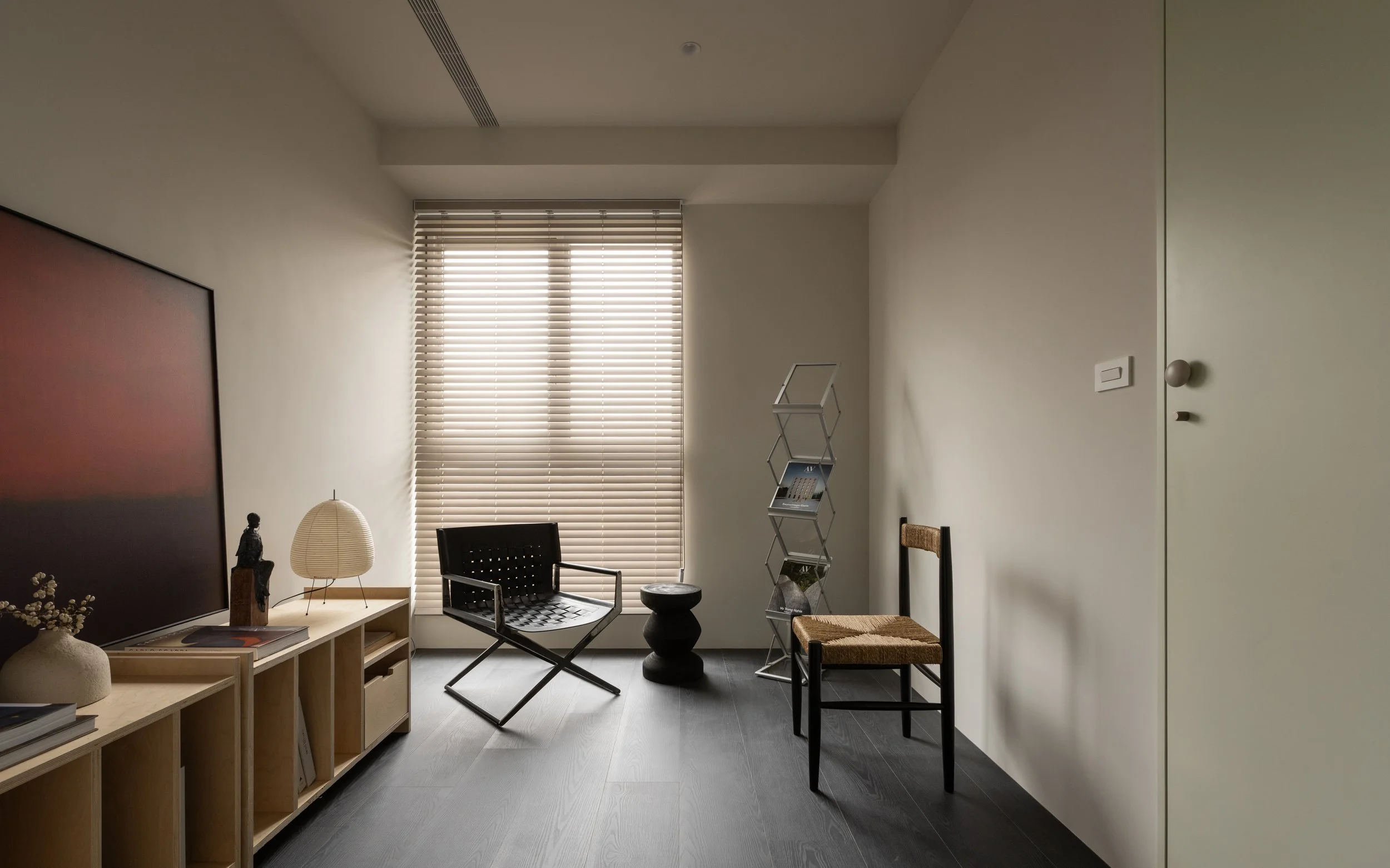
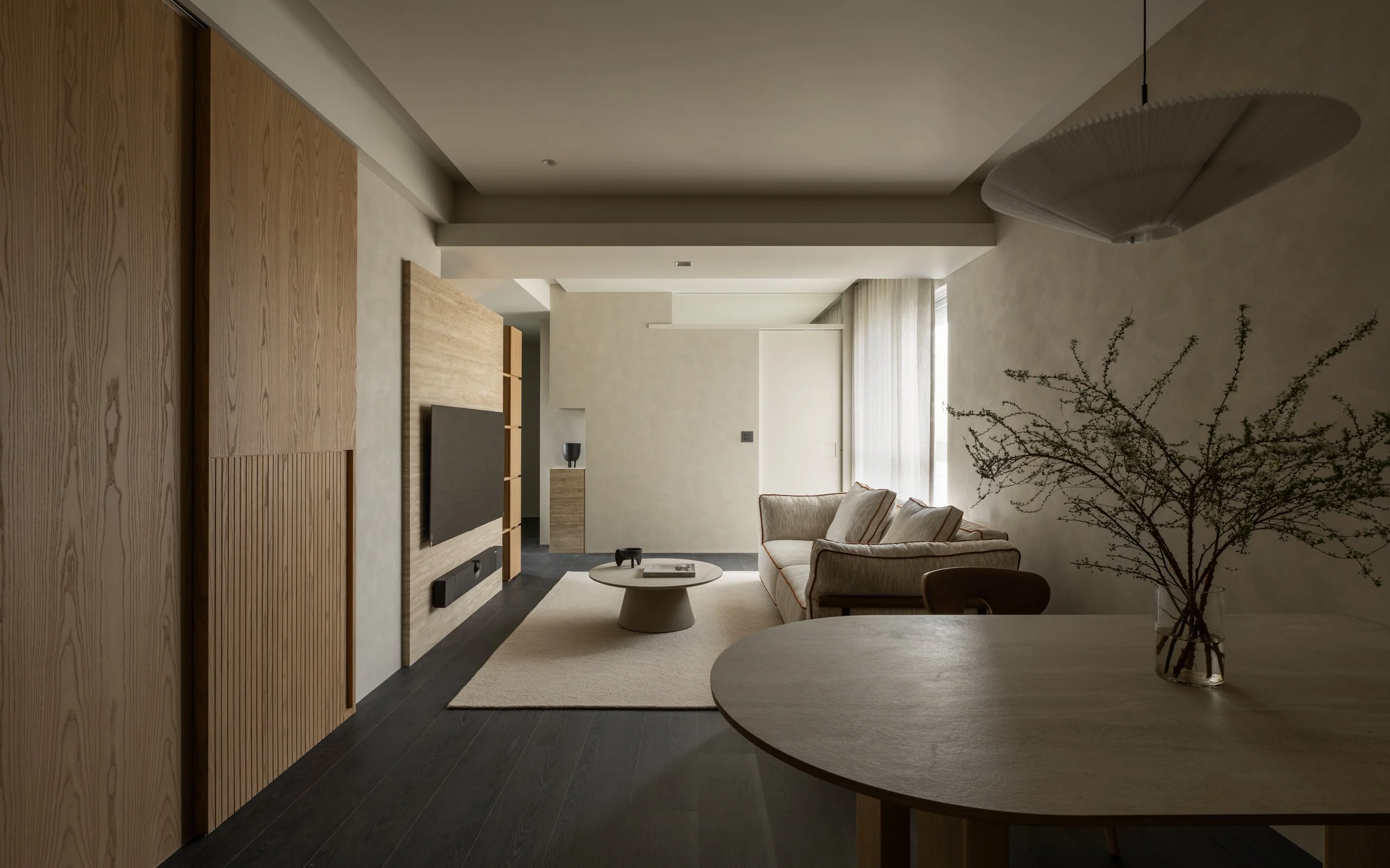
透過界面的轉折與材料的收斂,光得以被引導並緩慢滯留,在牆體與量體之間,形塑出可被感知的層次與深度。木皮選擇帶有明顯木節的紋理,保留其生長痕跡與非均質特徵,使表面呈現不規則且可辨識的時間性;洞石則藉由其孔隙與層理結構,提供介於粗獷與細緻之間的觸覺層次;礦物性特殊漆作為背景界面,以低反射的表面特性維持整體的連續性,並適度弱化視覺干擾。
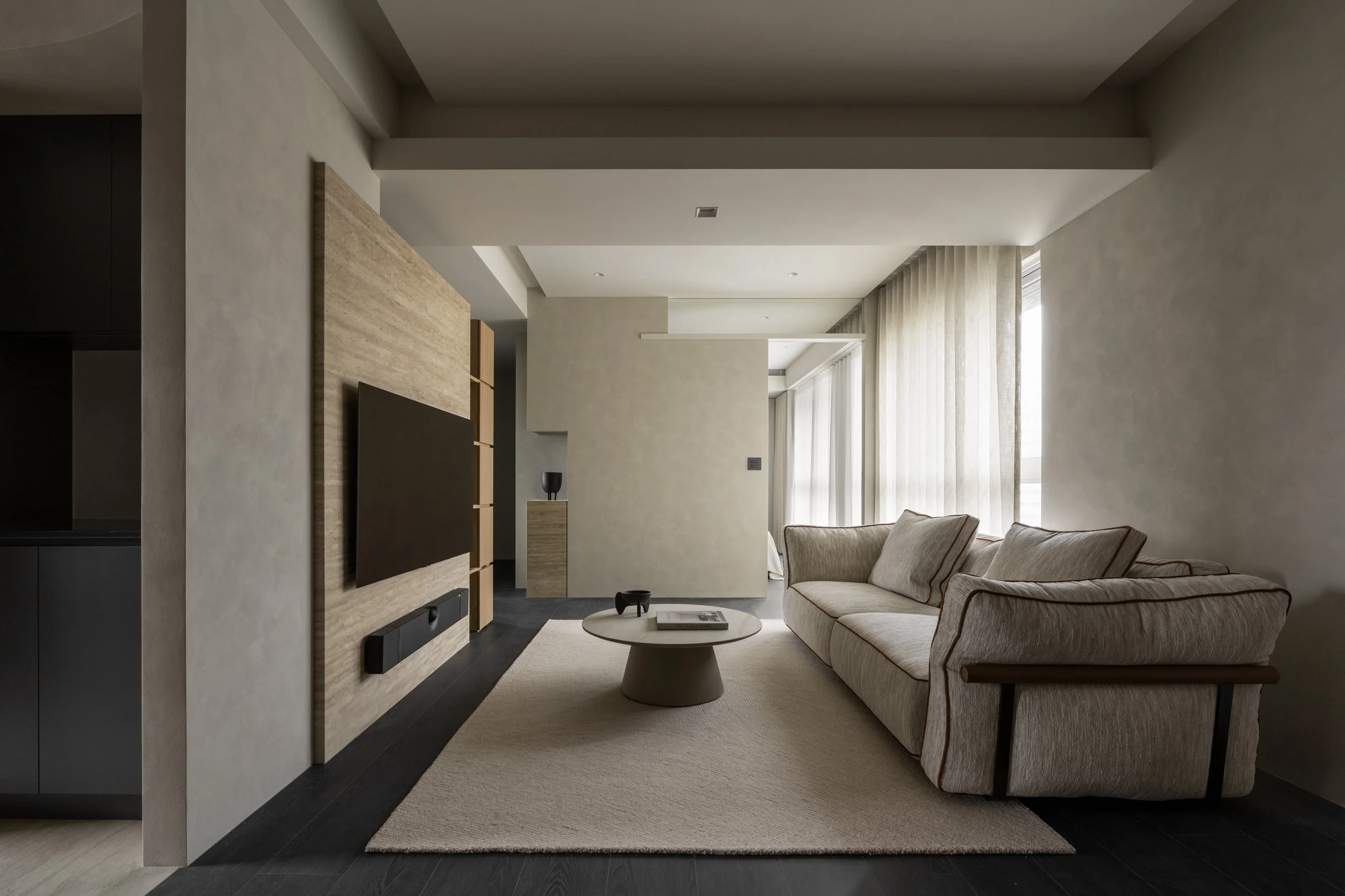
地坪選用較深的木質鋪面,作為空間的基準面,穩定整體重量感;並與牆面及天花形成清晰的垂直層級,使空間在單一語彙之中,仍保有尺度上的差異與方向性。Light is not conceived as a supplementary element, but as a spatial condition to be received and inhabited.
Through the articulation of interfaces and the controlled reduction of material expression, light is guided, diffused, and allowed to dwell—mediating the relationship between surfaces and volumes while rendering depth perceptible.The material strategy is grounded in a tectonic reading of surface and matter. Wood veneer, marked by pronounced knots, retains the traces of growth and inherent irregularity, introducing a temporal dimension to the interface. Travertine, defined by its porous voids and stratified formation, operates as a tactile register between roughness and refinement. A mineral-based textured coating forms a continuous field with low reflectivity, suppressing visual noise while reinforcing the continuity of the spatial envelope.
The floor is articulated as a darker datum plane, anchoring the spatial composition and stabilizing its perceived weight. In dialogue with the walls and ceiling, it establishes a legible vertical hierarchy, through which variations in scale, orientation, and spatial depth are subtly perceived within a restrained material system. Within this framework, material is not applied as finish, but operates as a primary agent in the construction of spatial perception—where light, surface, and depth are continuously negotiated.
SQUARIET
INTERIOR PROJECT|2026Space Type|Residential
Floor Area|100 m²
Location|Taoyuan, Taiwan
Photography|MD