INTERFACE WITHIN
INTERFACE WITHIN
-
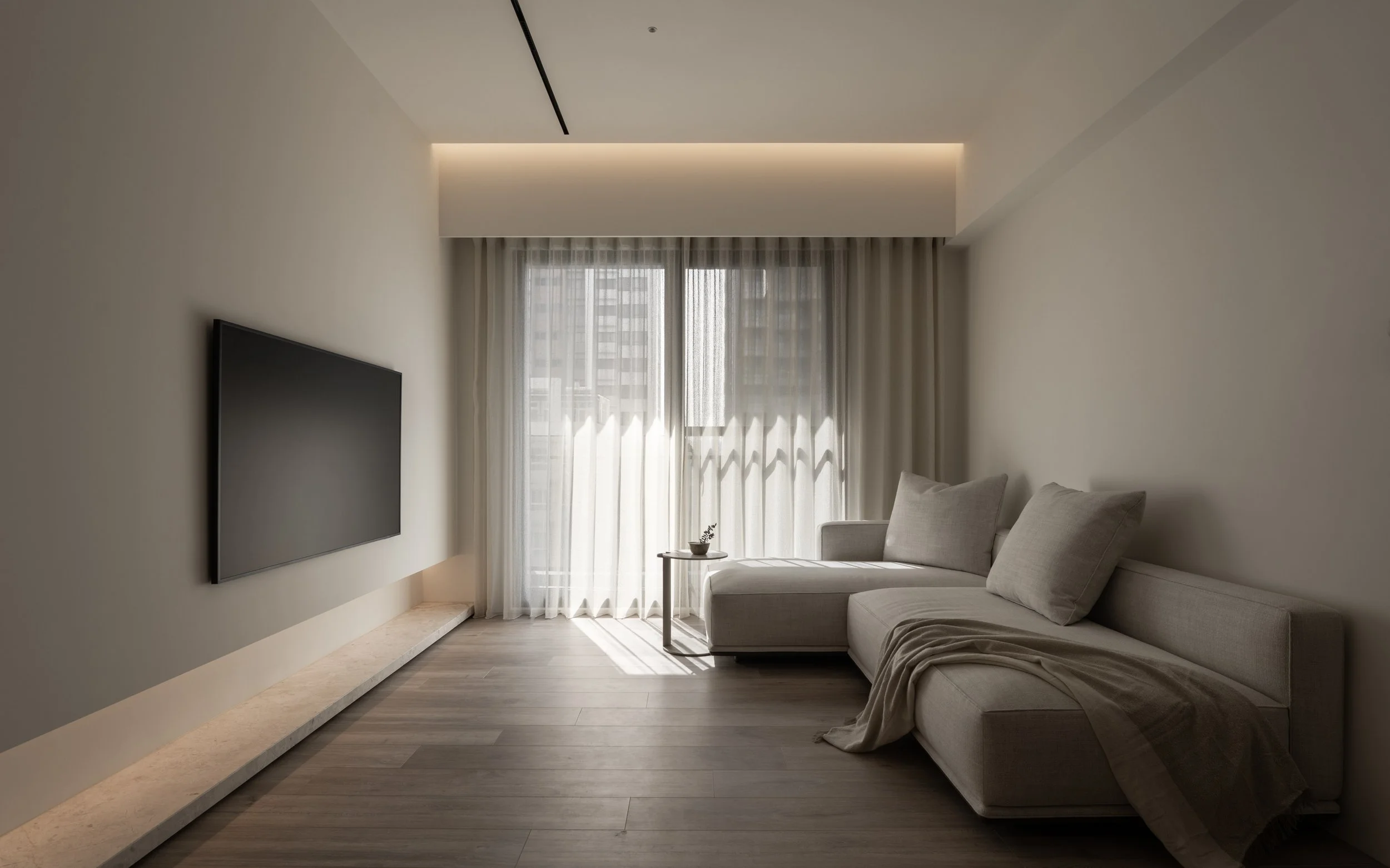
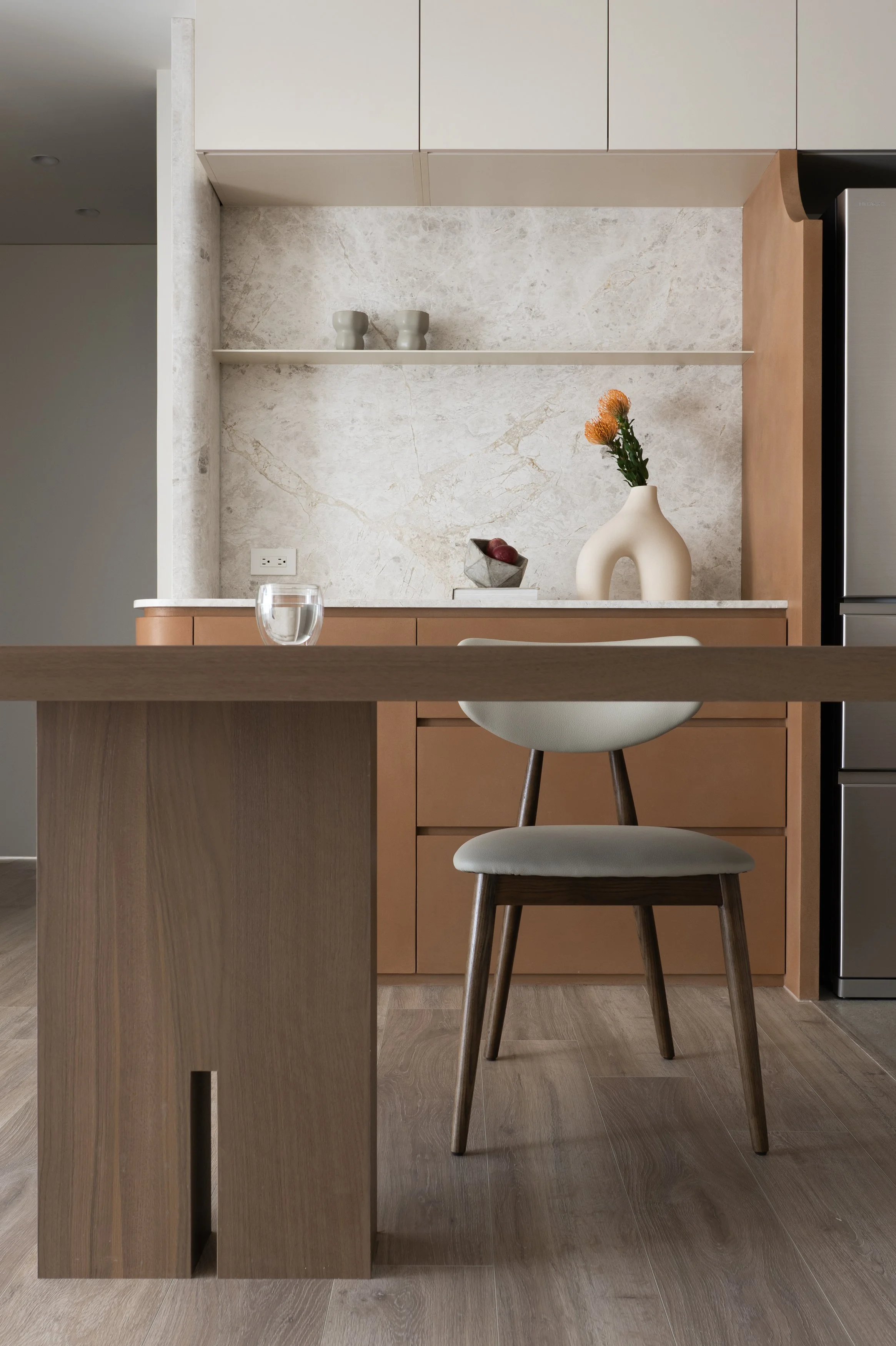
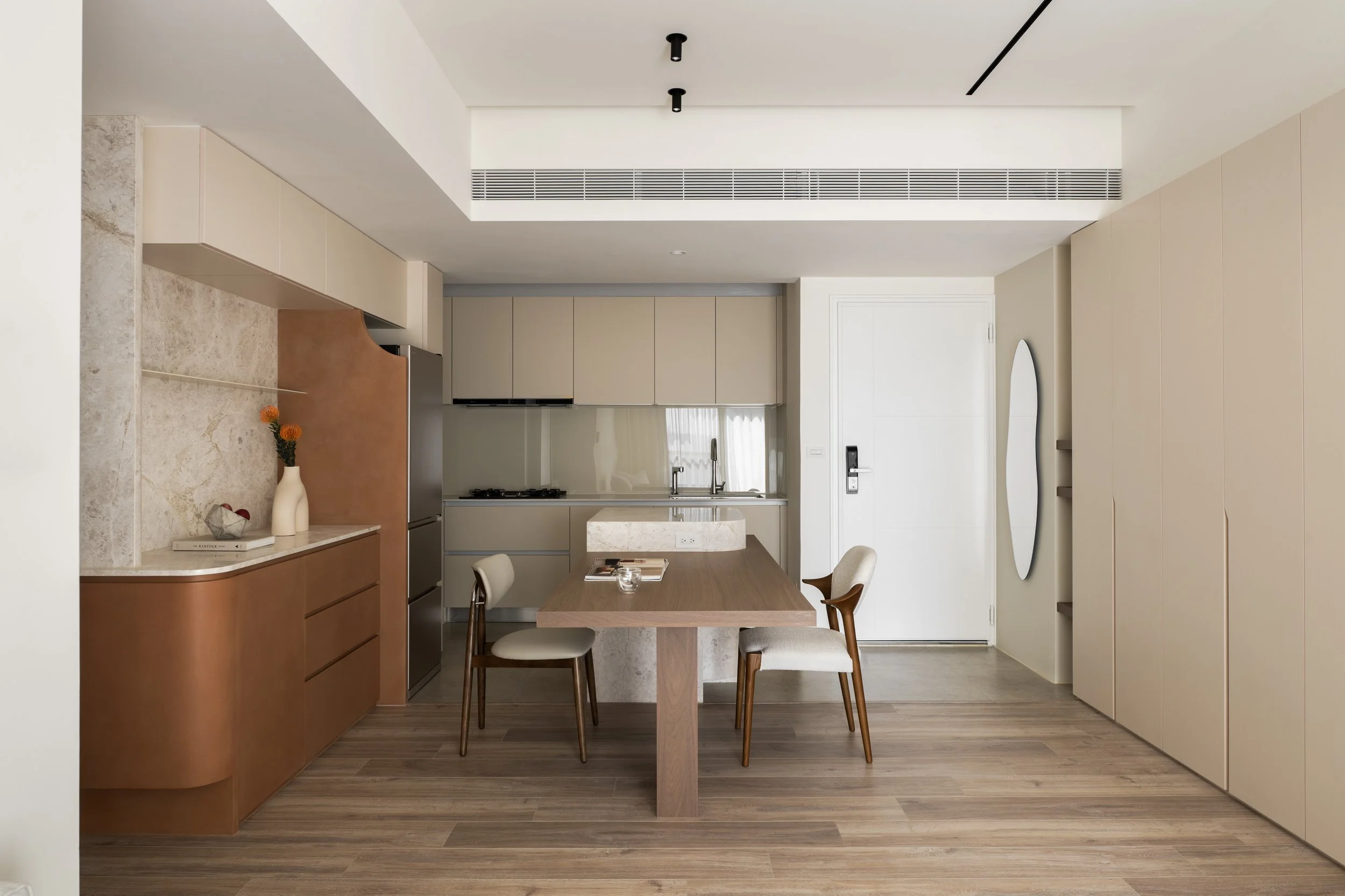
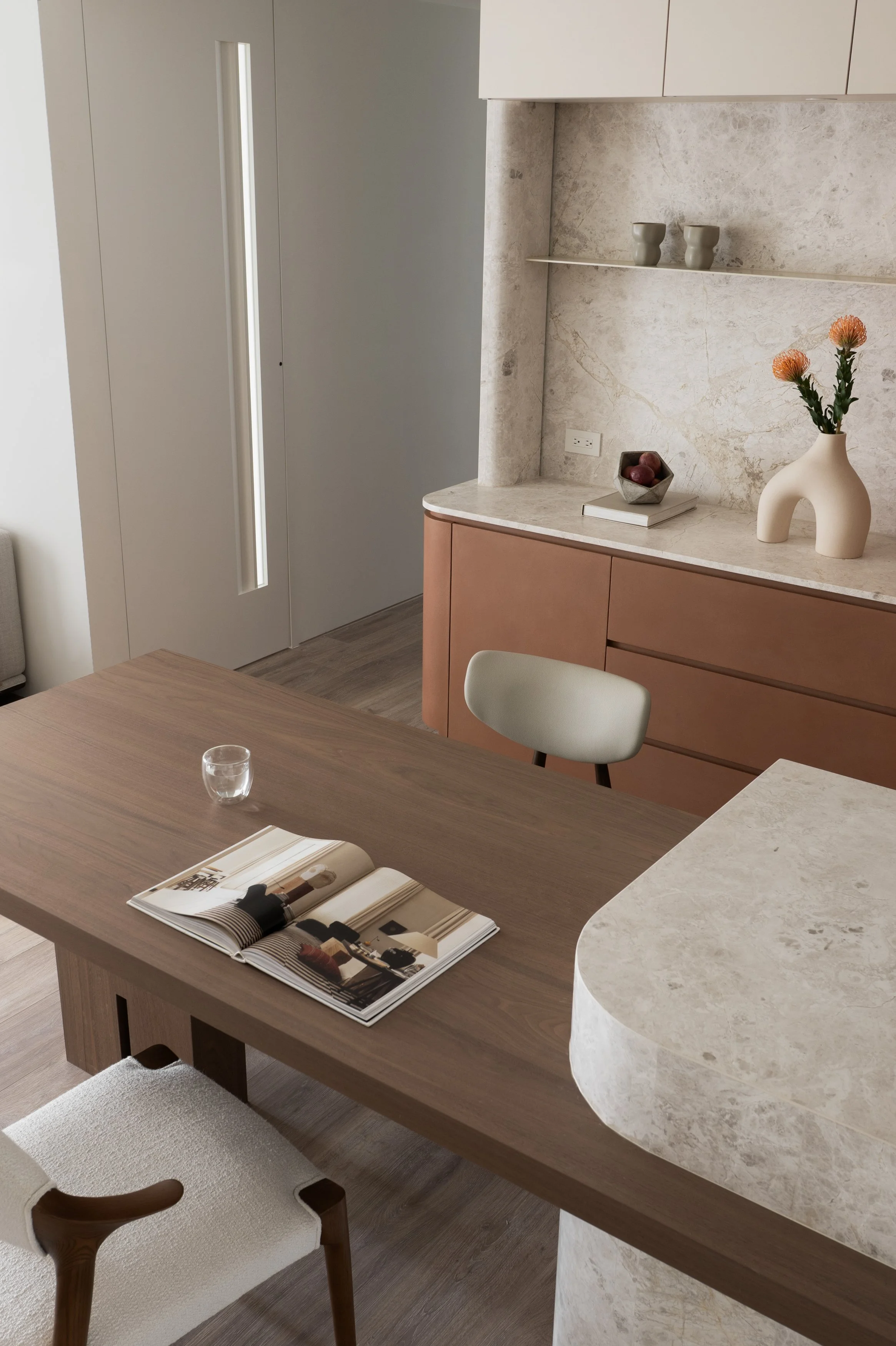
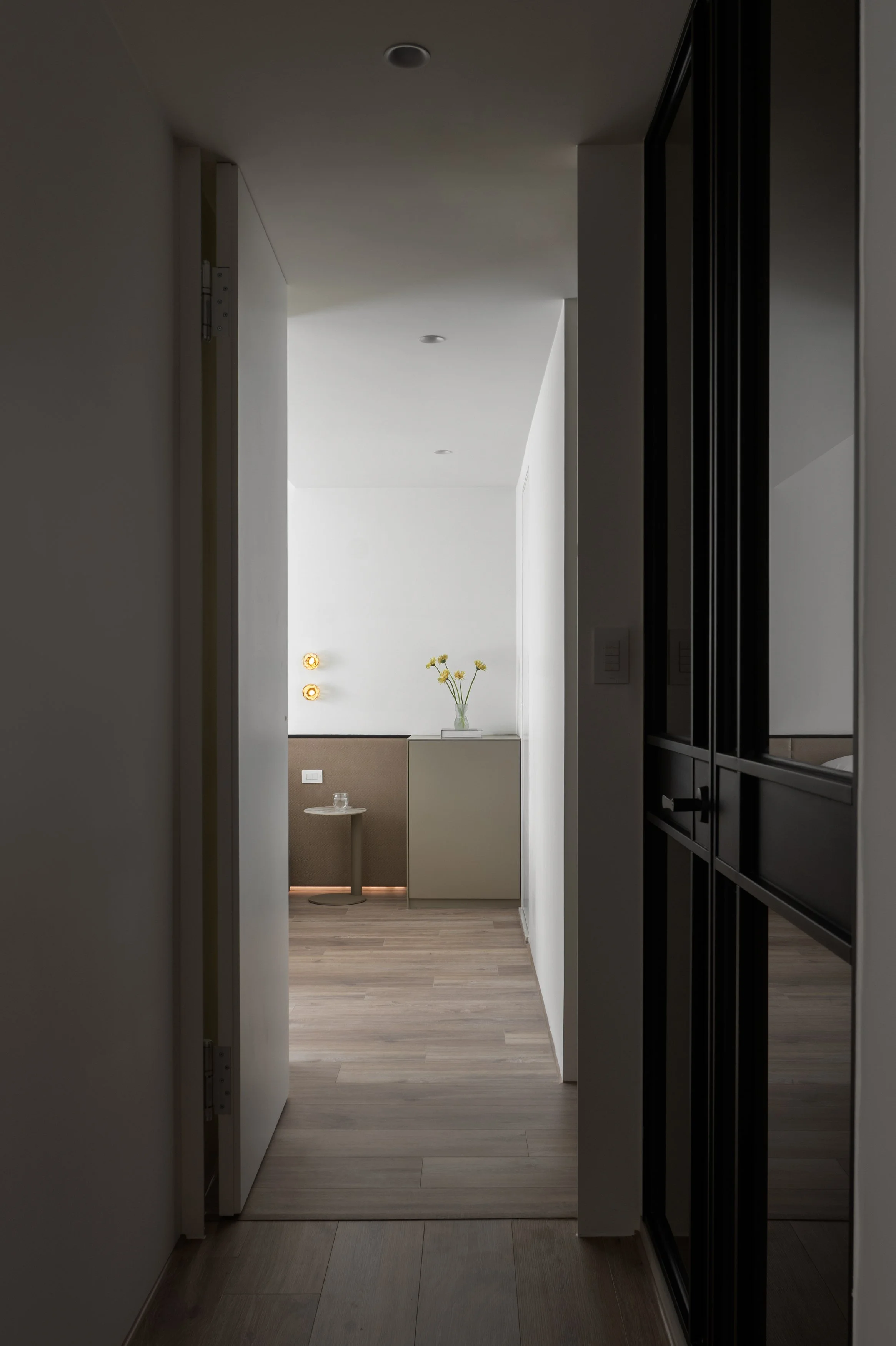
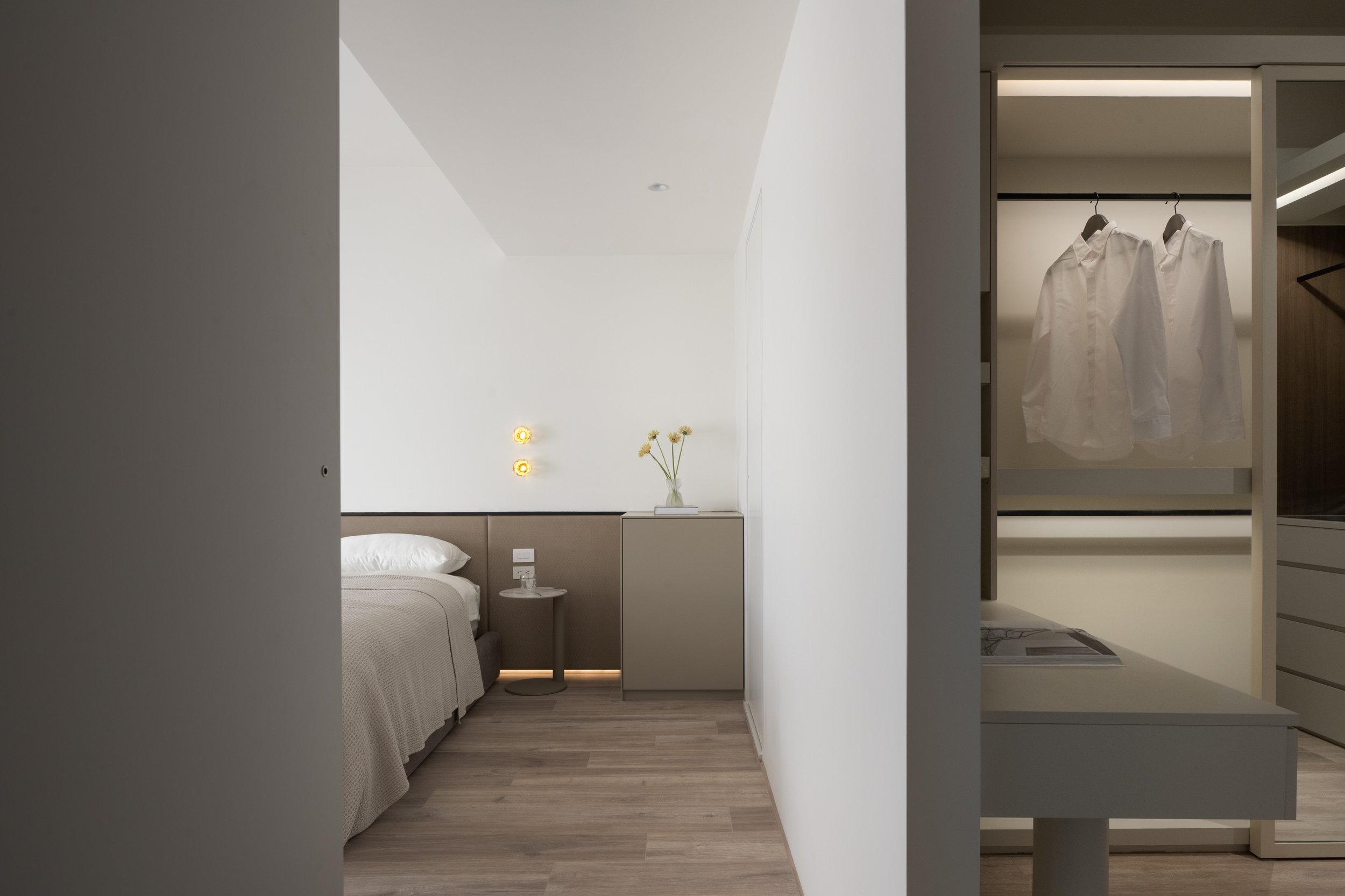
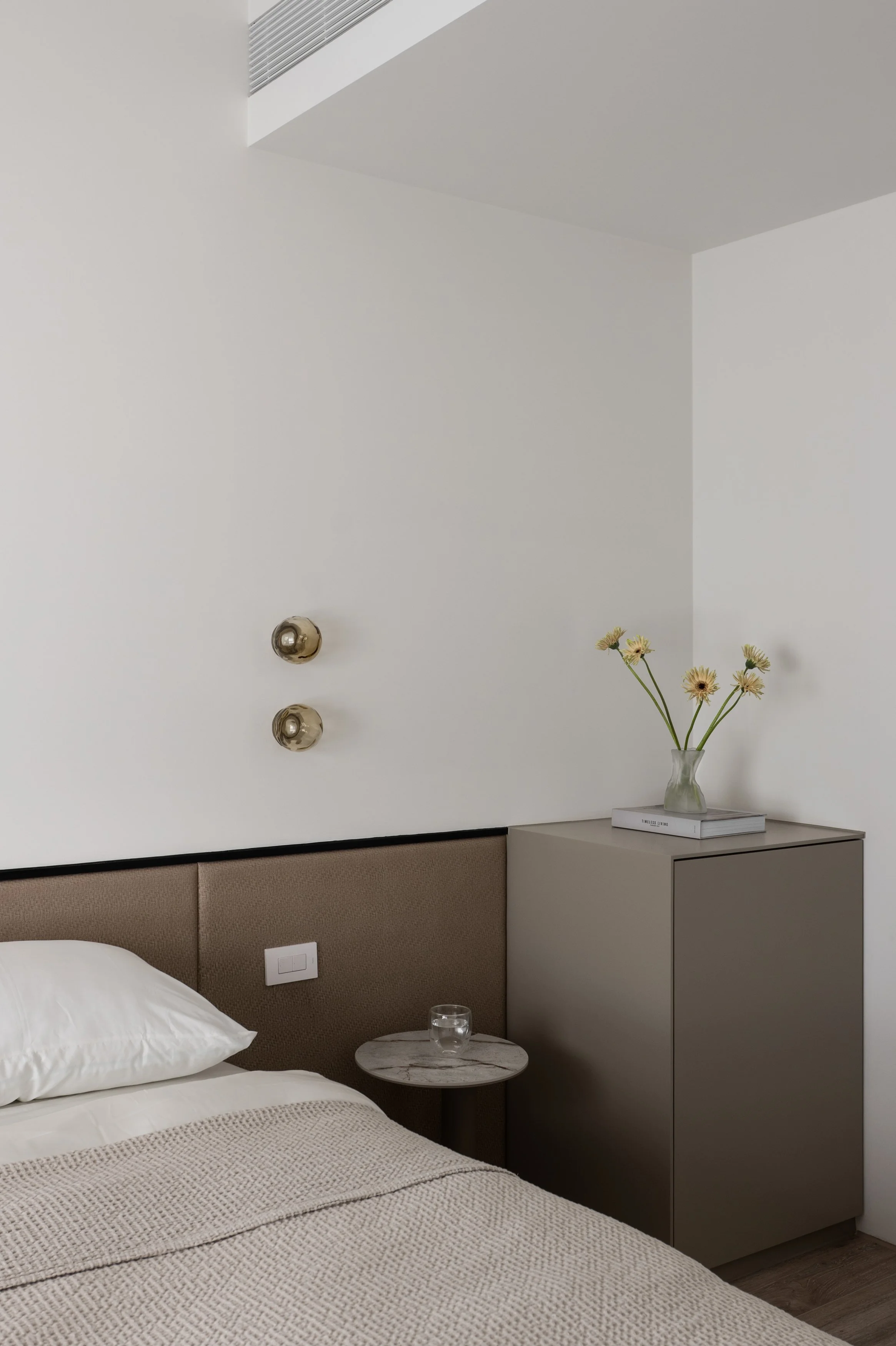
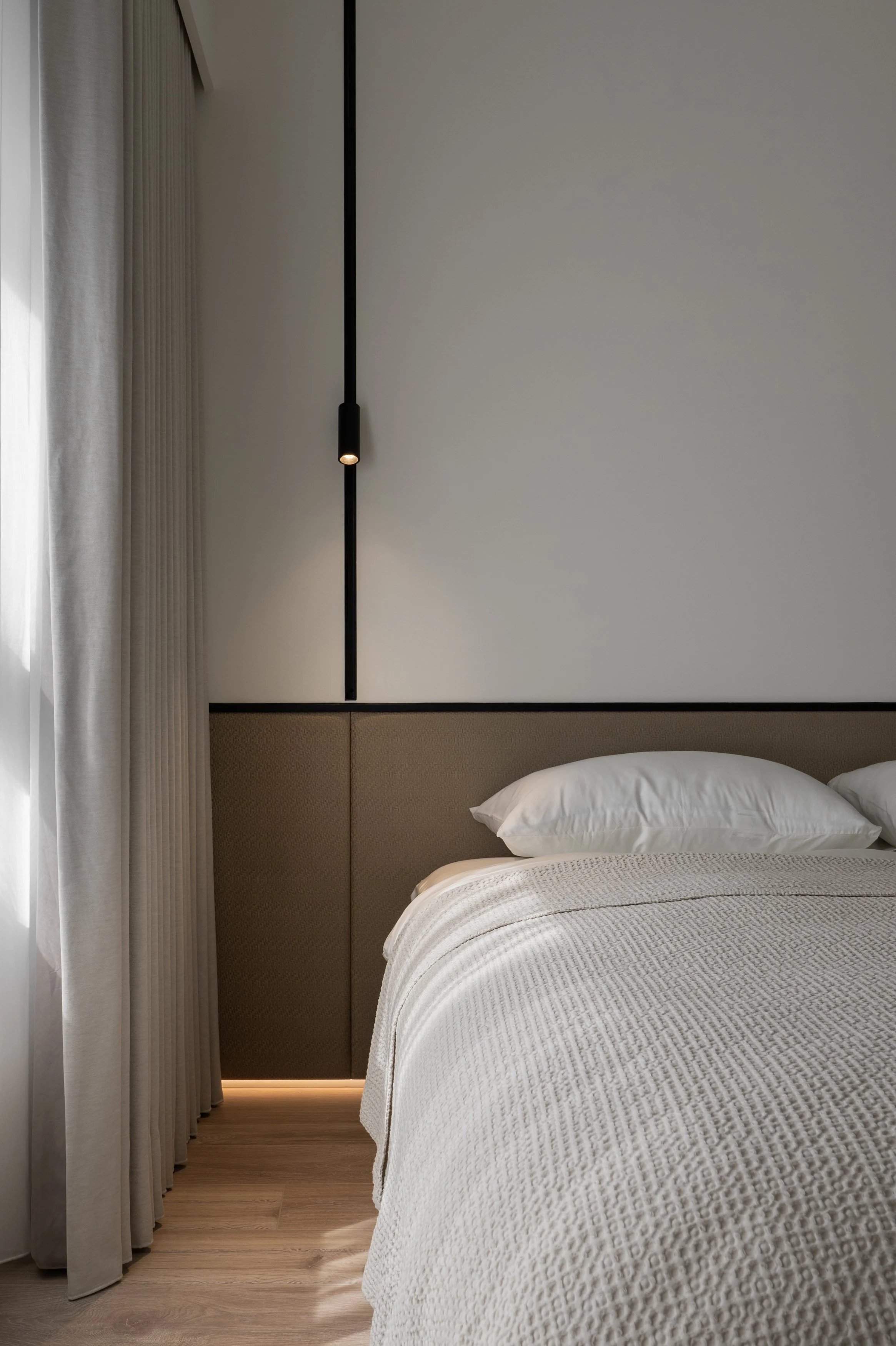
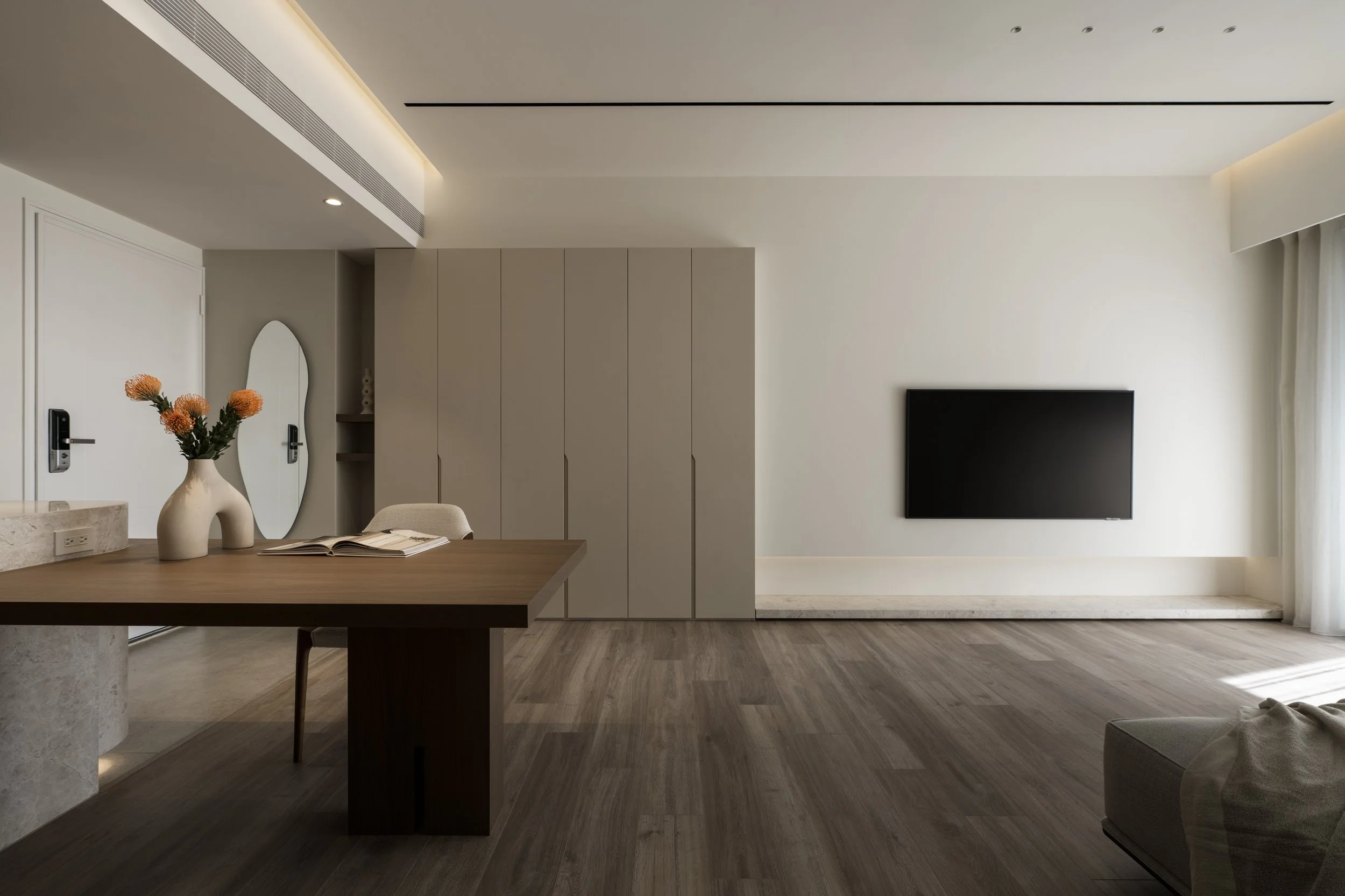
空間被收斂至最純粹的狀態,去除多餘的語彙,只留下材料與光的對話。
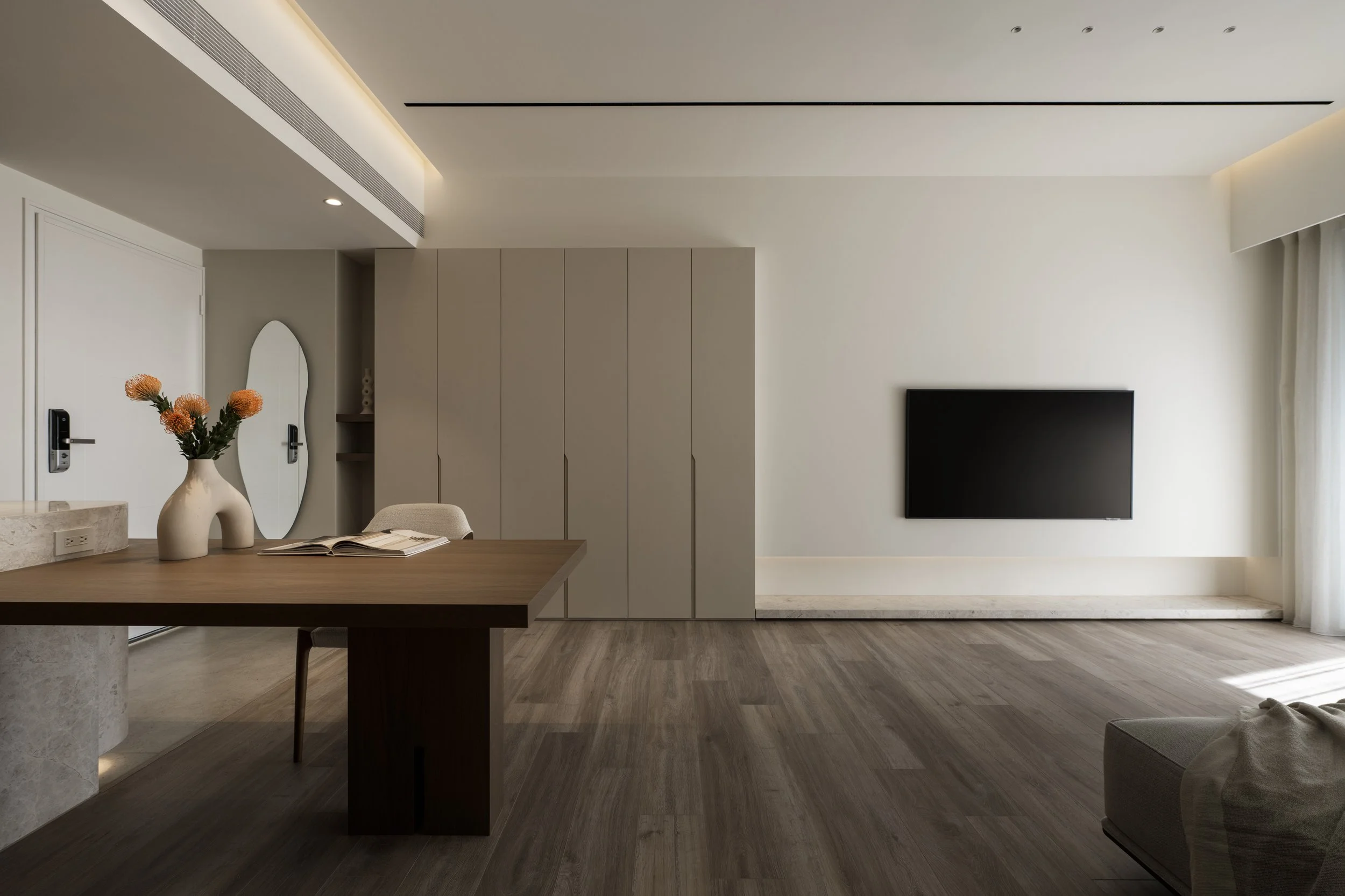
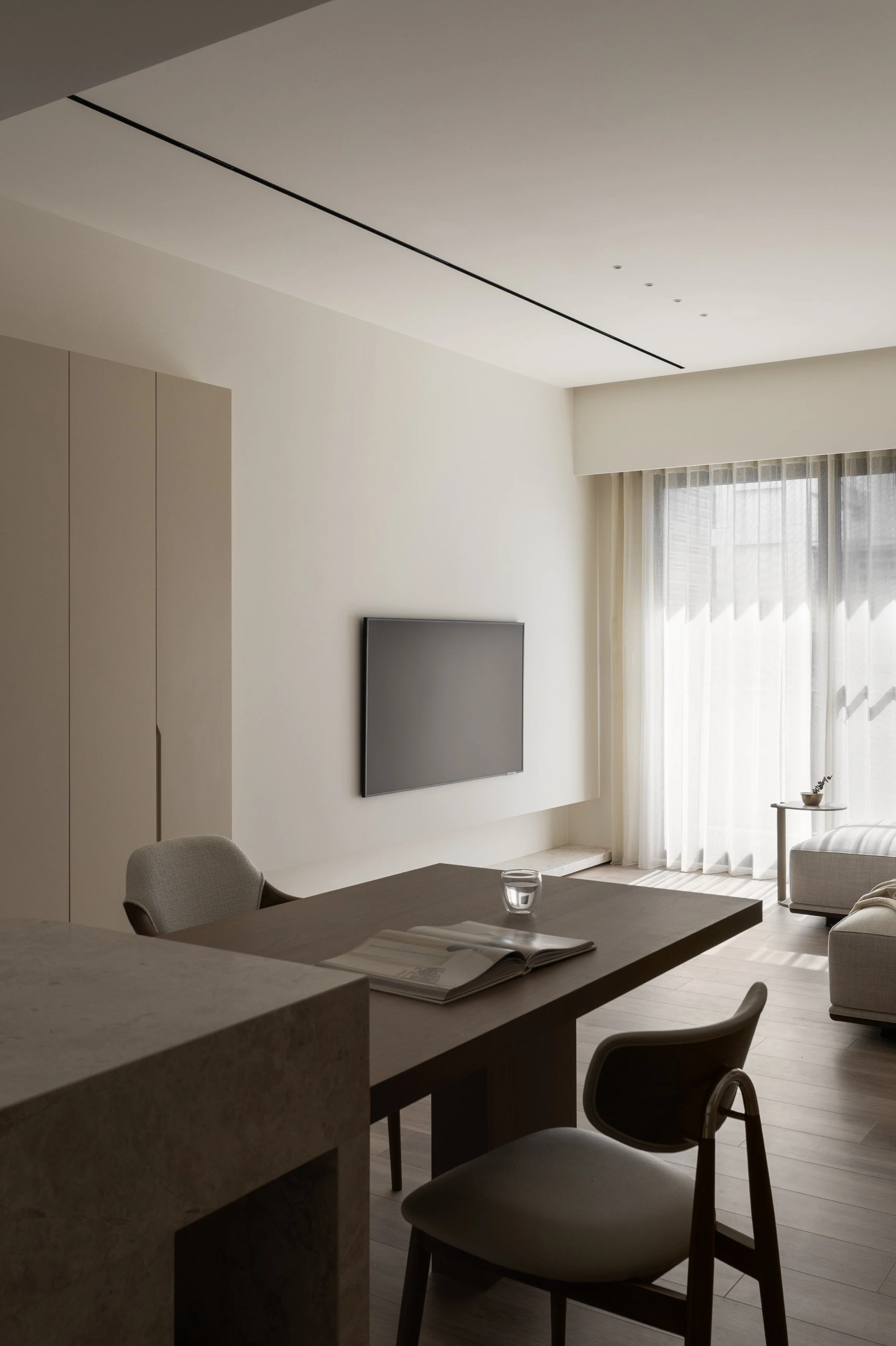
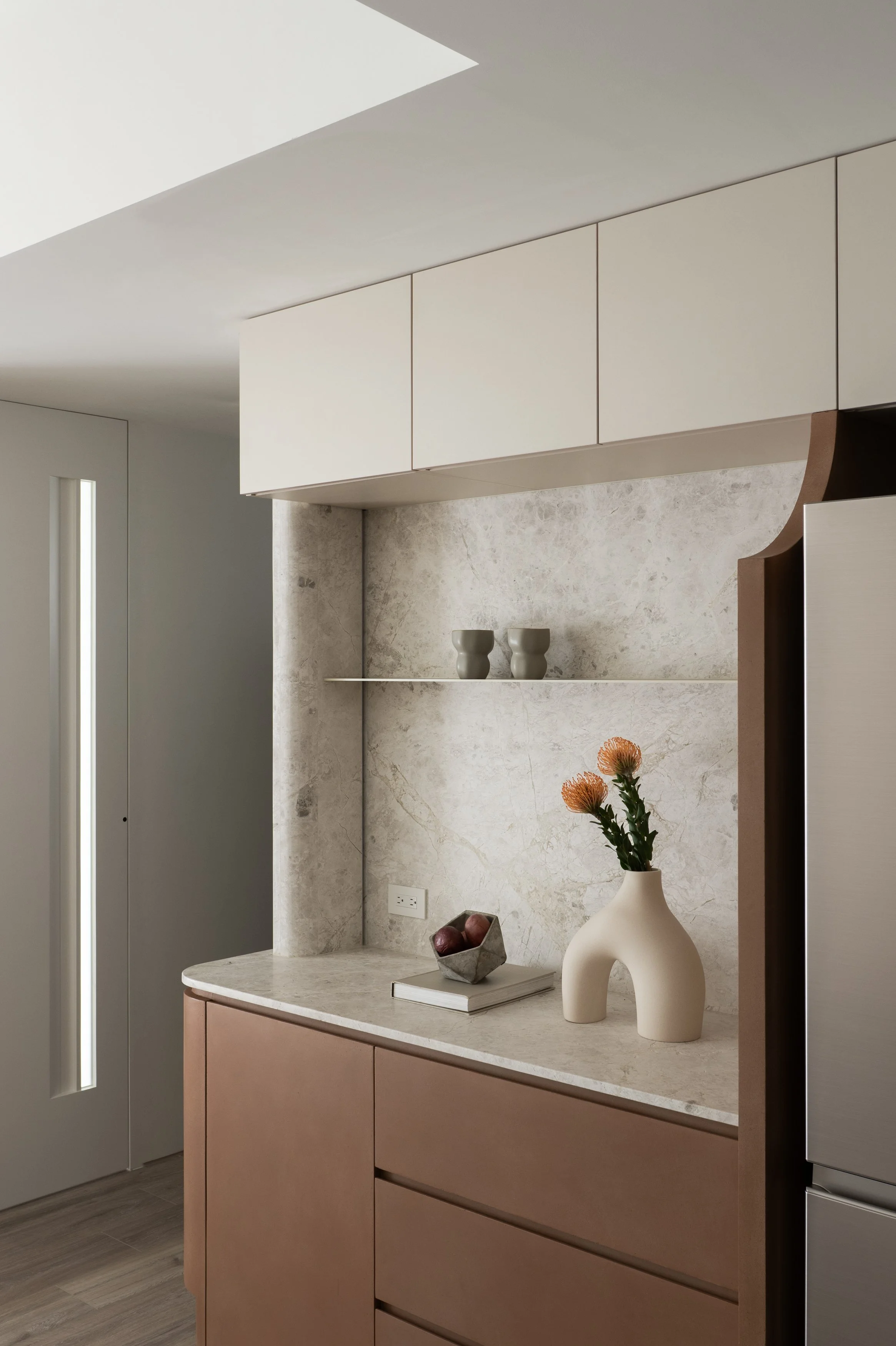
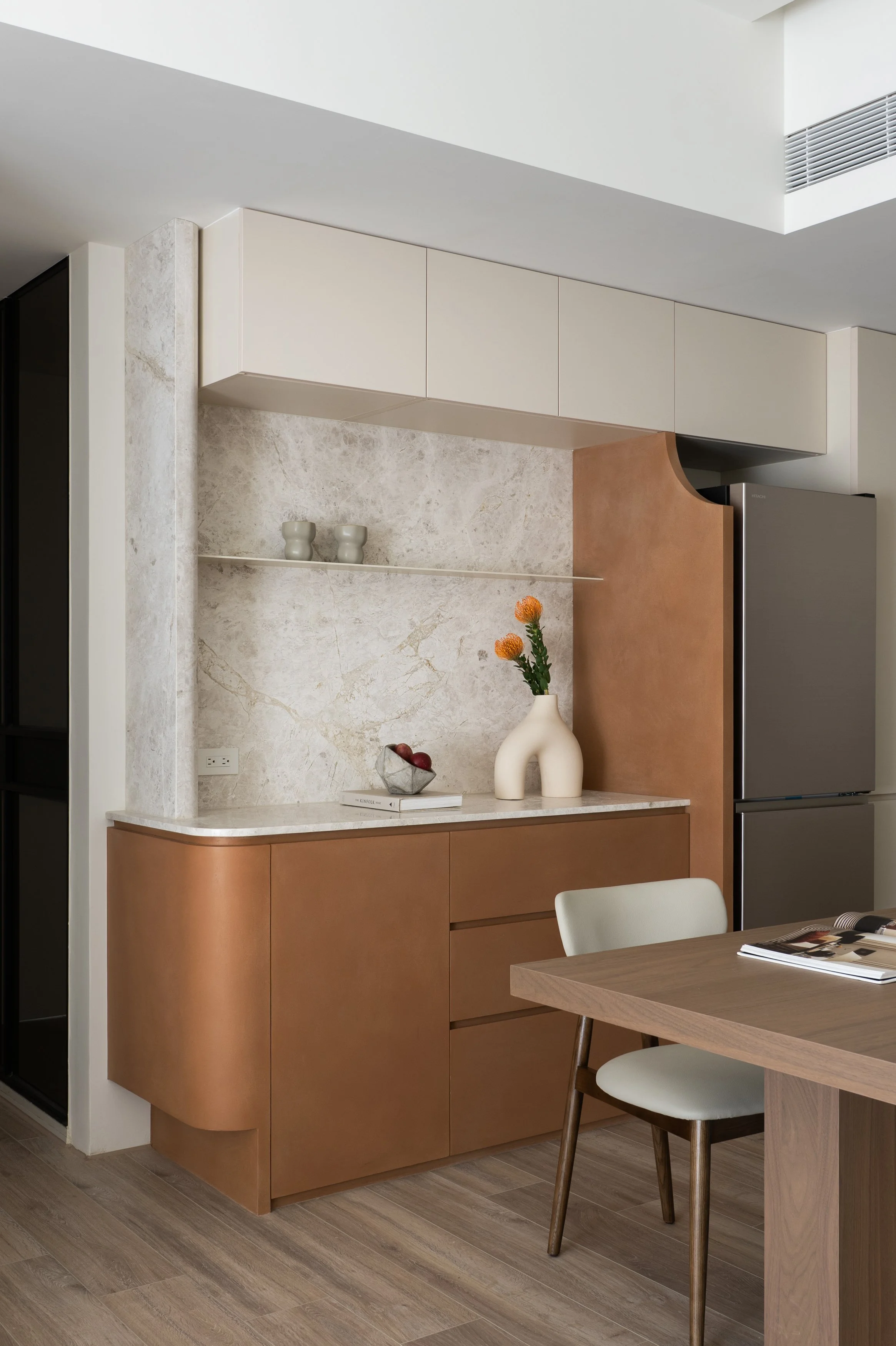
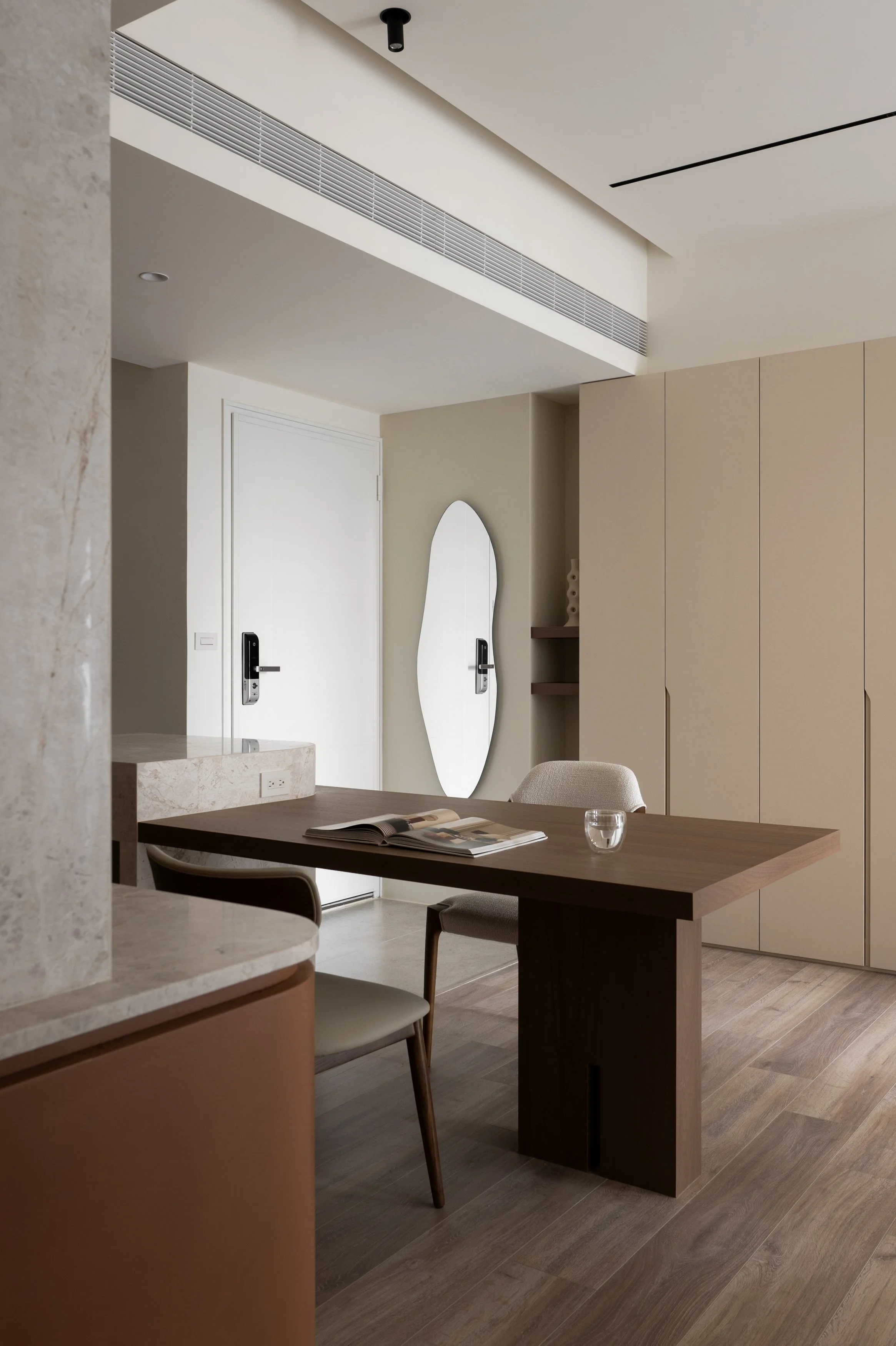
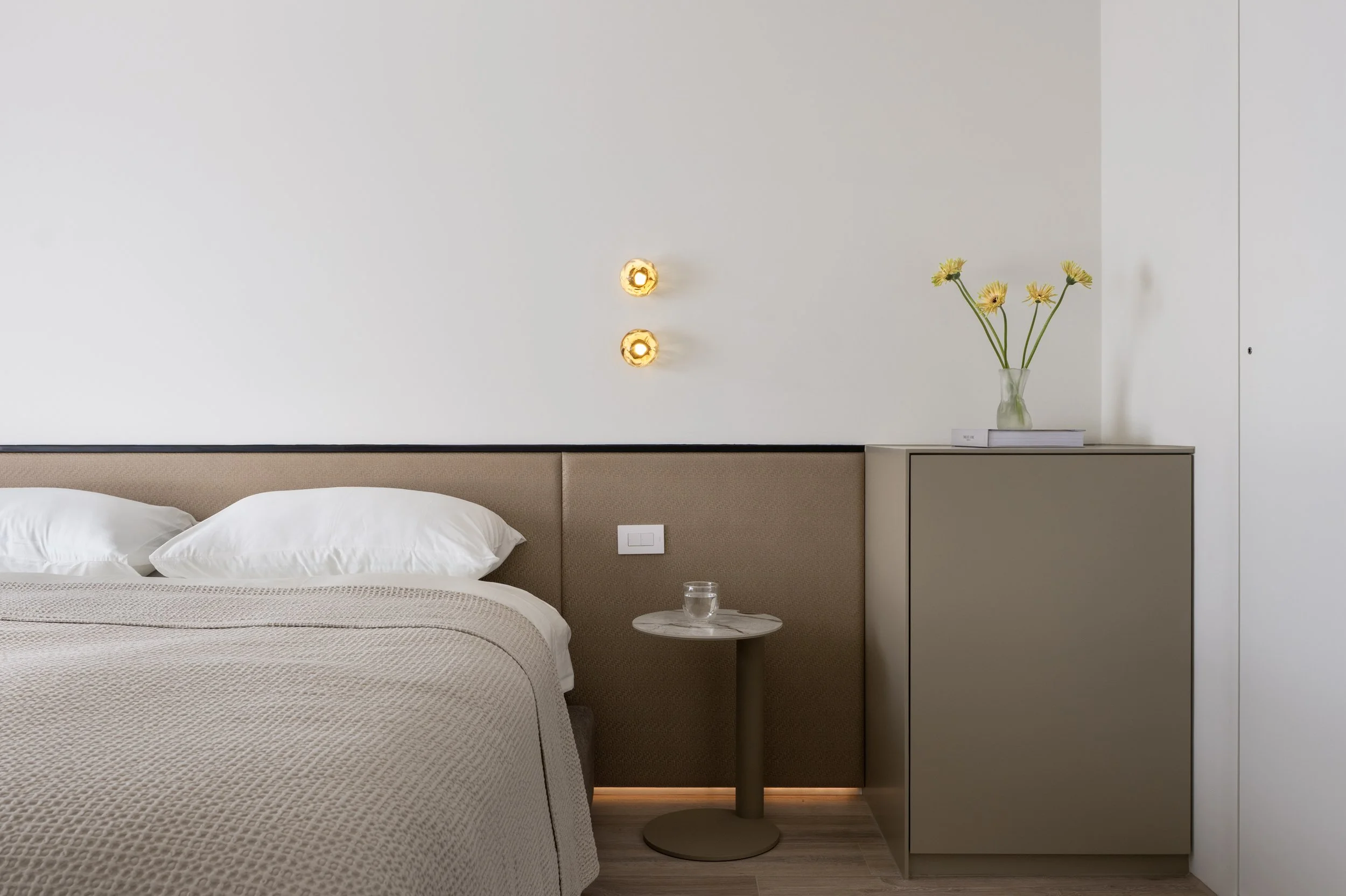
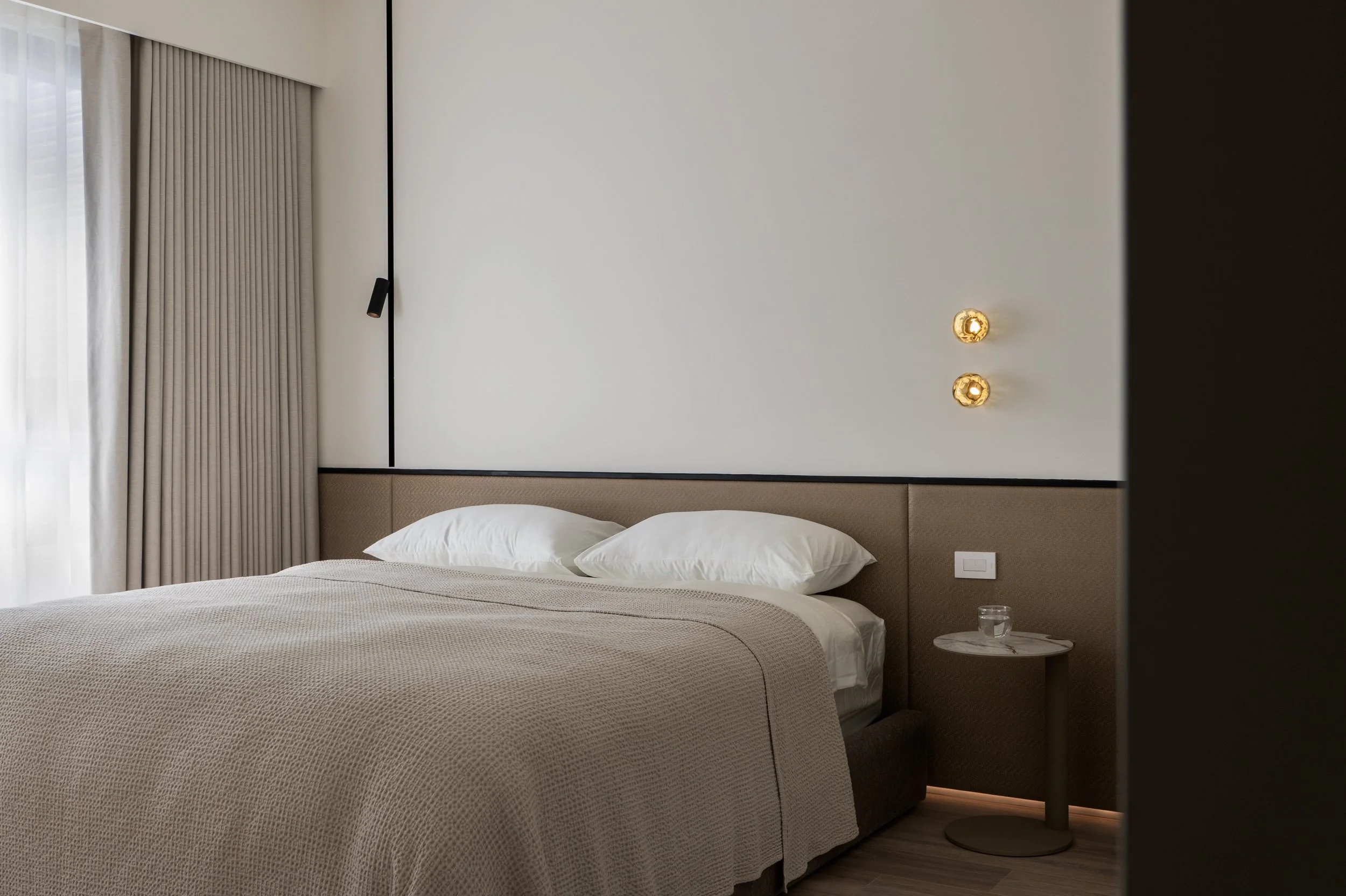
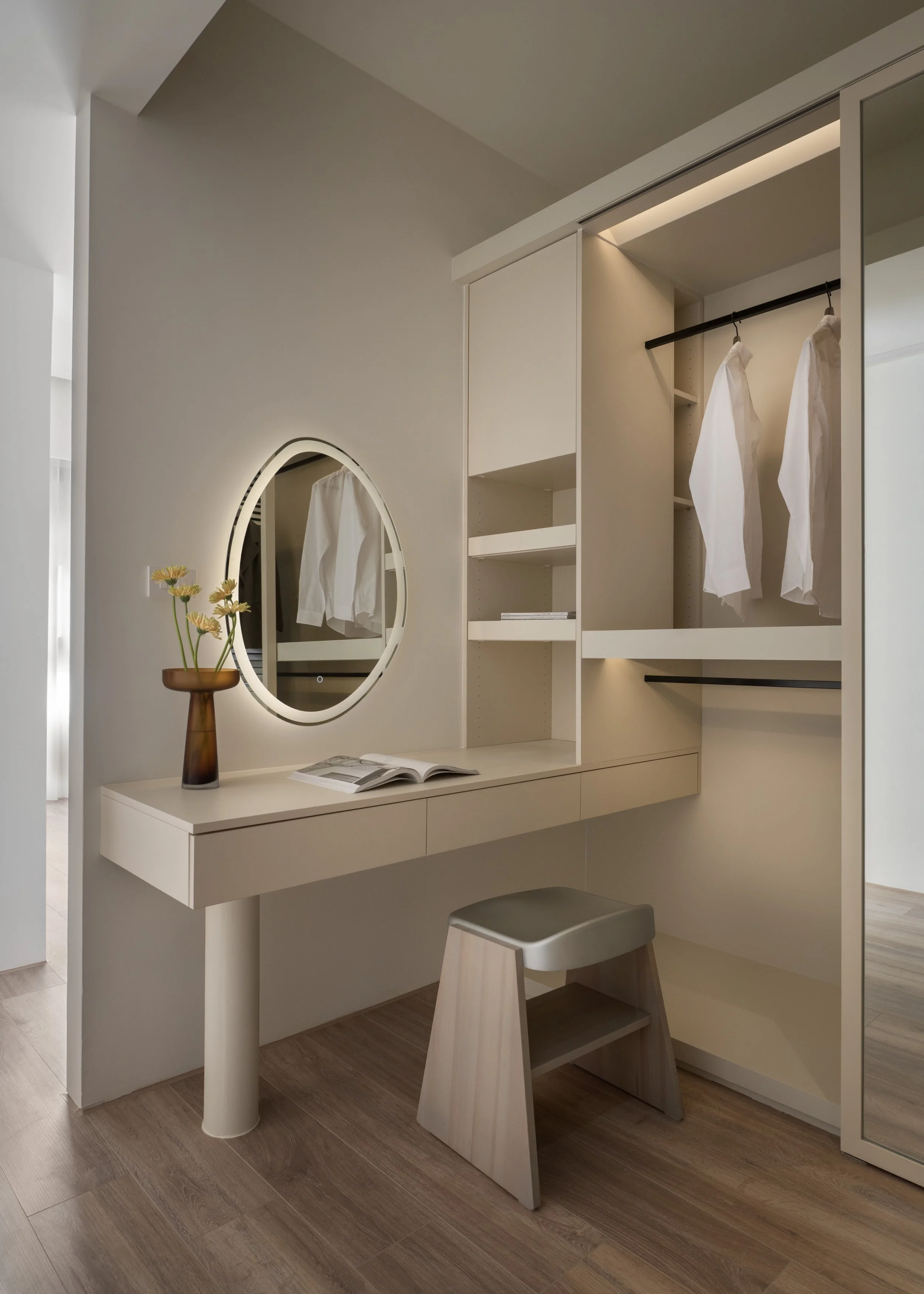
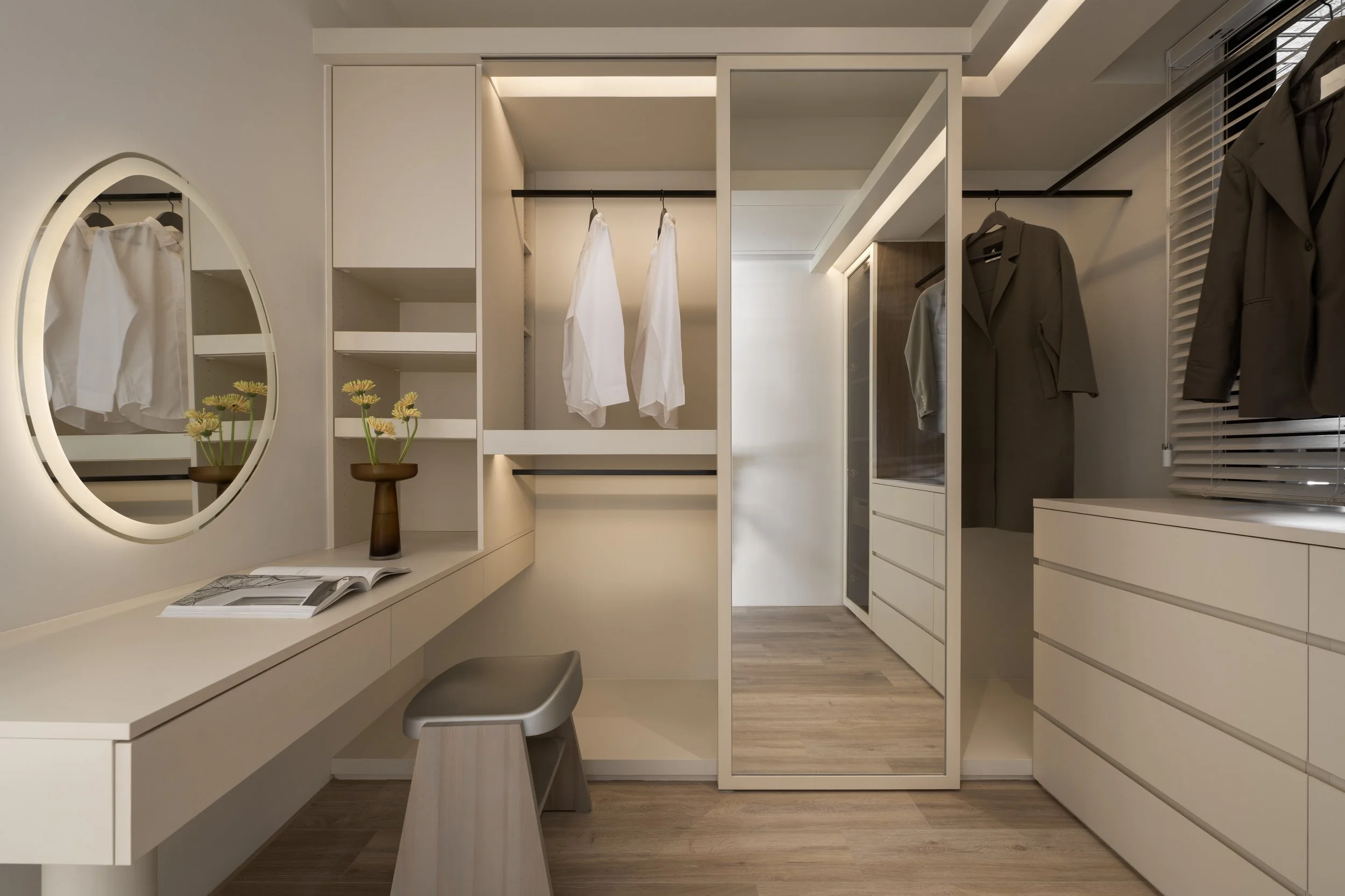
本案從「界面」出發,重新思考空間的生成方式,設計並未著重於形式的建立,而是透過減法策略,梳理構造、尺度與材料之間的關係,使空間回歸至一種更純粹且可被感知的狀態,牆體在此被重新定義為具有厚度的空間單元。光被視為構成的一部分,而非附加條件。間接光源隱藏於天花與立面的轉折之中,隨著日照的變化,緩慢描繪出材料的紋理與空間的深度,光影的流動,使空間在時間之中持續生成,而非靜止存在。
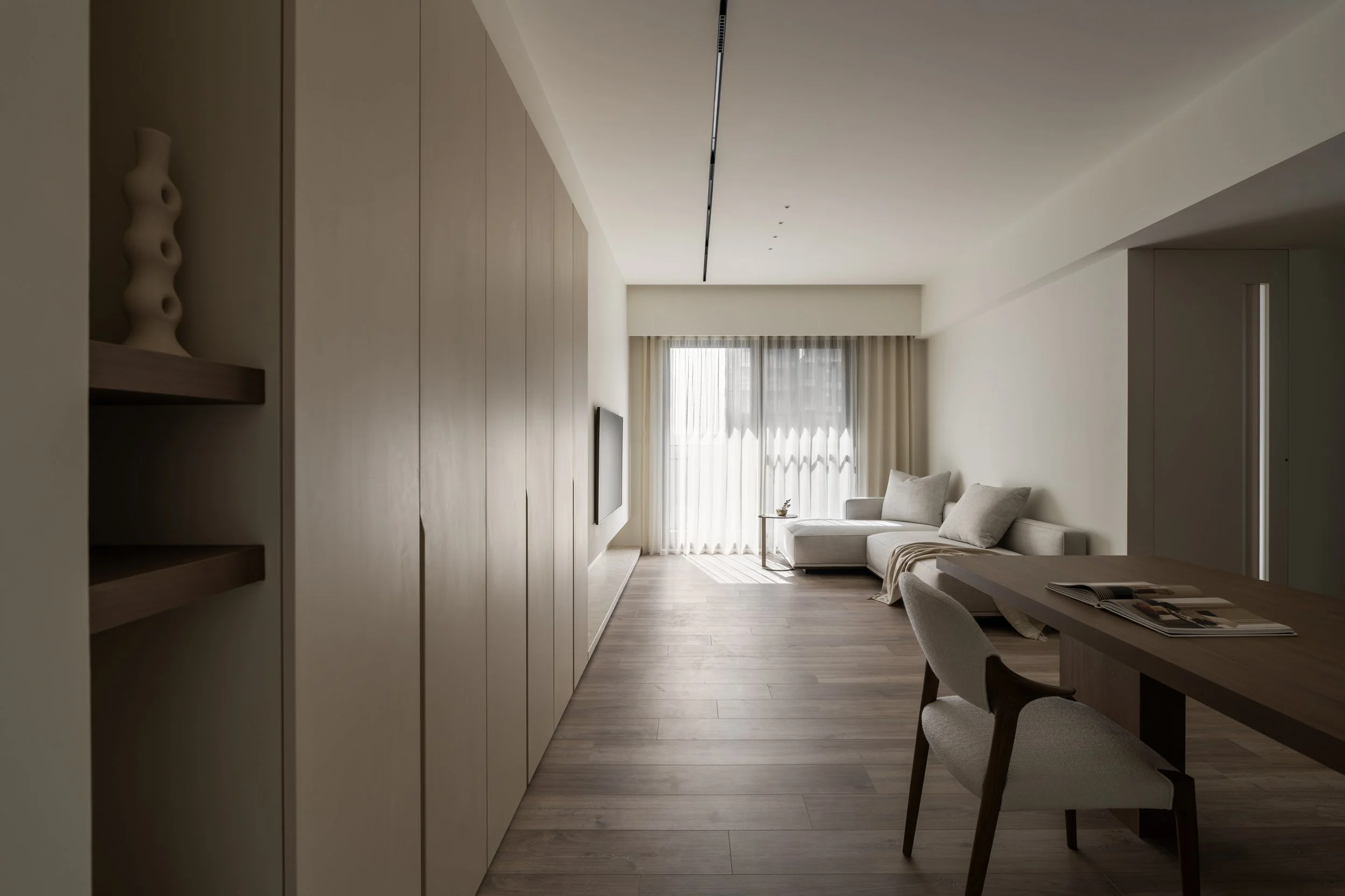
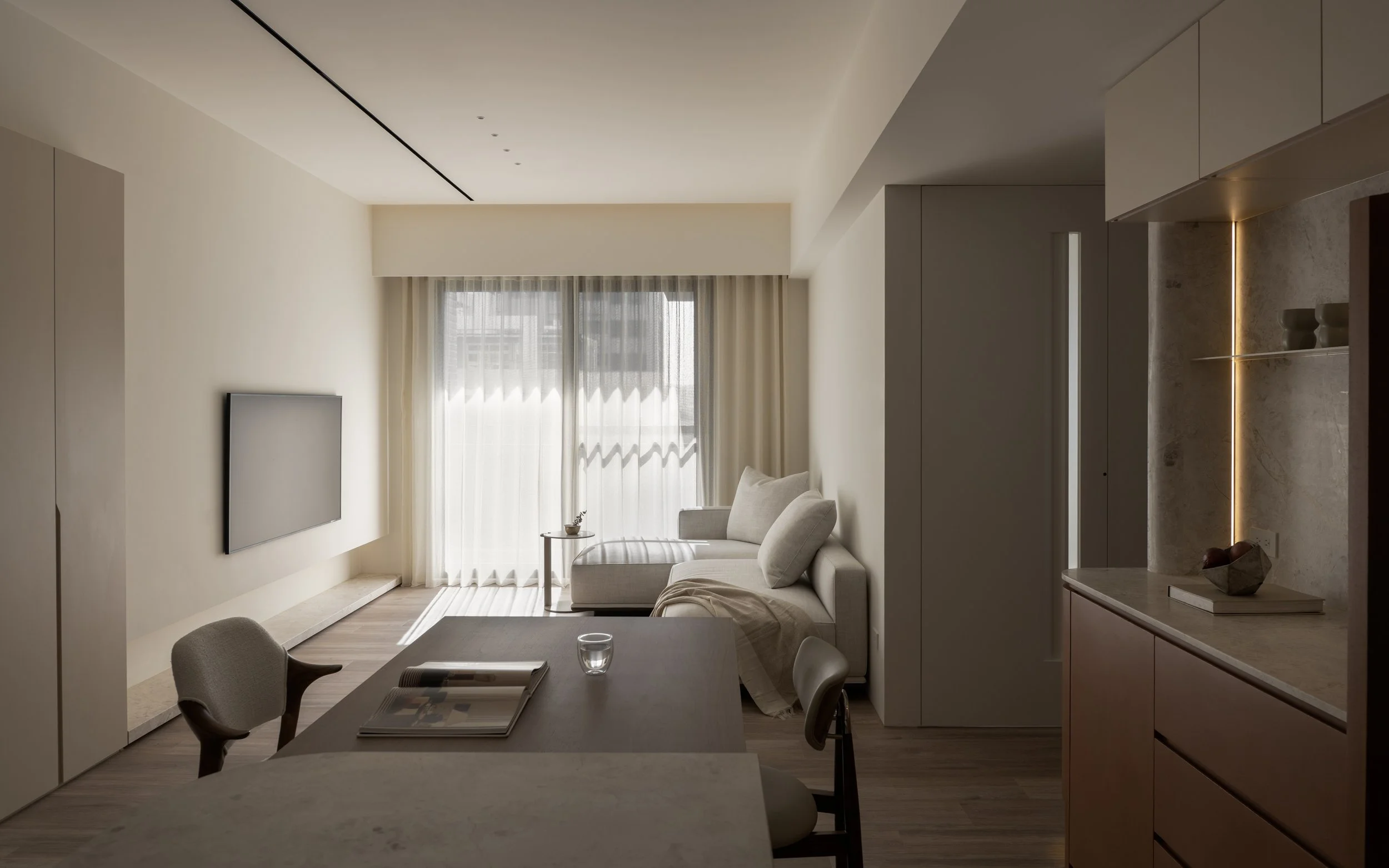
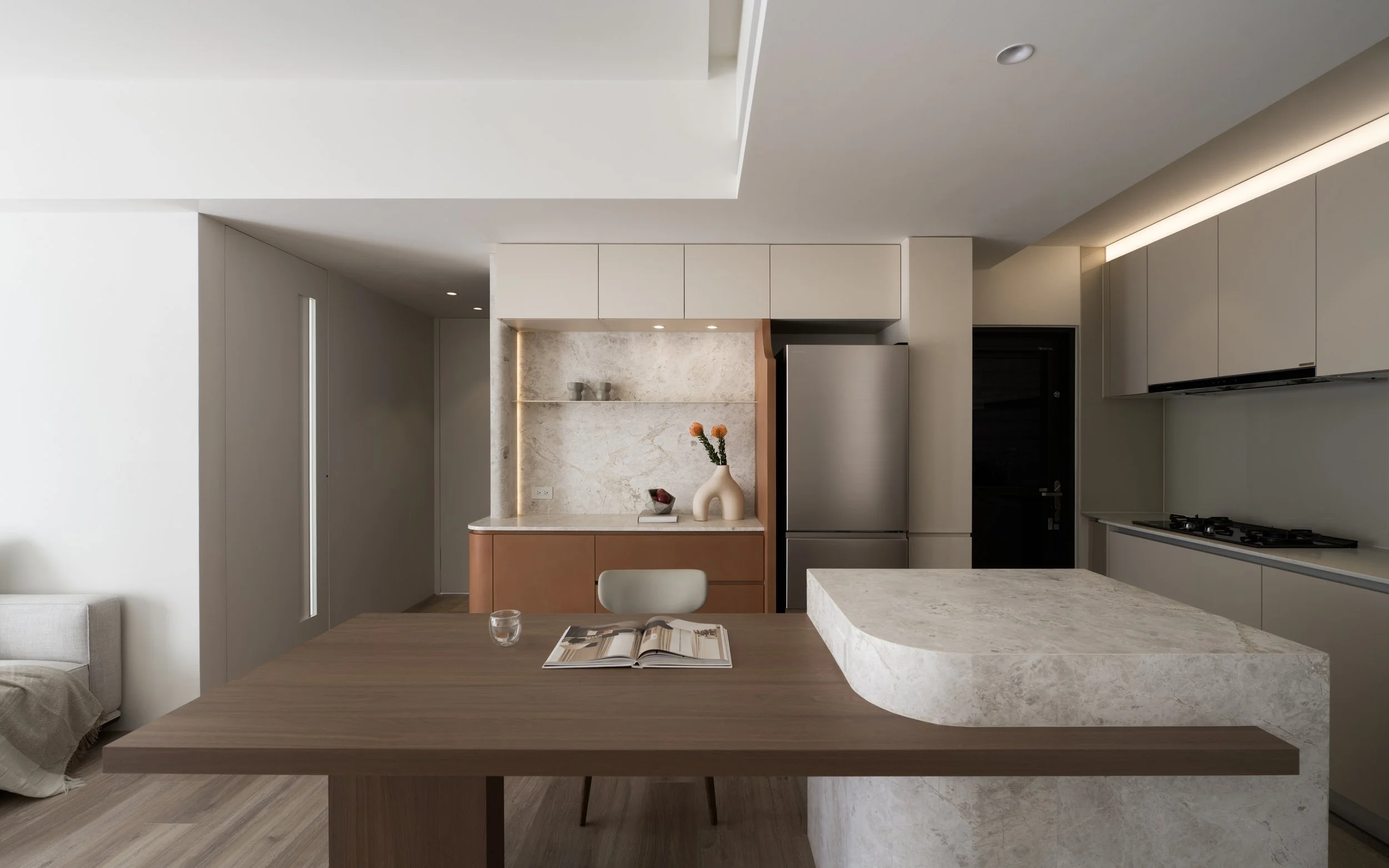
以開放的公領域整合客廳、餐廳與日常活動,透過水平延展的界面與視線的連續,建立一種鬆散而有序的使用關係,使生活在其中自然發生,而非被預先定義。
The space is reduced to its most essential condition, where excess is stripped away to foreground a quiet dialogue between material and light.
Conceived through the notion of the “interface,” the project reconsiders how space is constructed. Rather than pursuing formal expression, a subtractive approach is employed to recalibrate the relationships between structure, scale, and material. In this framework, walls are no longer treated as flat partitions, but as thickened spatial elements that integrate storage, services, and program, transforming boundaries into inhabitable zones.Light is conceived as a building material in its own right. Indirect illumination is embedded within the junctions of ceilings and vertical planes, allowing light to wash across surfaces and articulate the textures and depth of the space. As daylight shifts, shadows and reflections continuously redefine spatial perception, rendering the interior as a temporal rather than static condition.
The plan dissolves conventional functional divisions, organizing the living, dining, and kitchen areas into a continuous field. Horizontal extensions and uninterrupted sightlines establish a spatial continuity that is both open and controlled, enabling patterns of occupation to emerge organically rather than being predetermined.
The project resists stylistic imposition, instead constructing a legible spatial order through the interplay of interface, material, and light—where architecture recedes, and space itself becomes the primary medium of expression.
INTERFACE WITHIN
INTERIOR PROJECT|2026Space Type|Residential
Floor Area|70 m²
Location|Hsinchu, Taiwan
Photography|MD